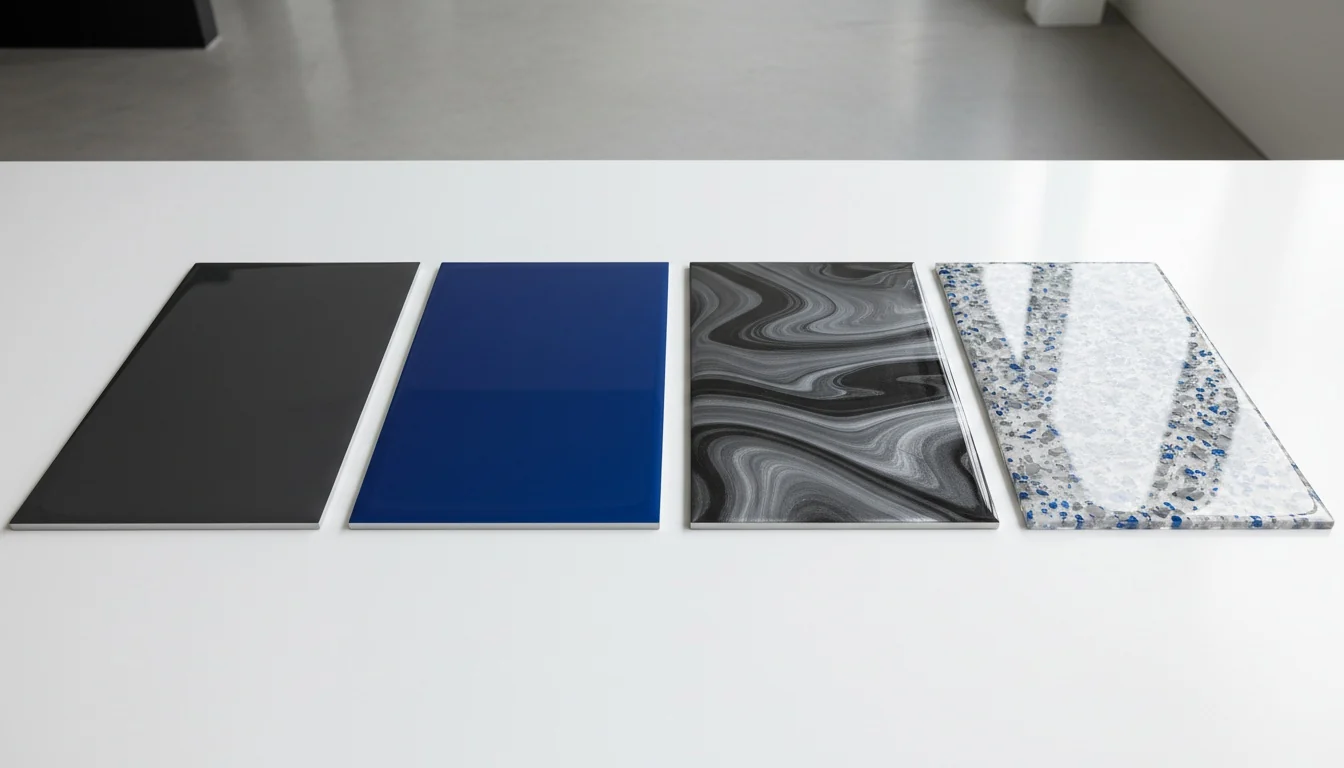

One of the best things about an epoxy floor is that you are not stuck with grey. Epoxy is a genuinely versatile finish, and the right colour or effect can lift a tired garage, warm up a living space or pull a whole room together. This guide walks through the main epoxy colours and design ideas — solid shades, metallic effects, flake-chip blends and gloss levels — and how to pick a look that actually suits your room and the Cape Town light. If you would rather see it than read about it, browse the looks you can achieve in our finish examples gallery.
Key takeaways
- Epoxy floor colours run from quiet solid greys and charcoals to bold blues and custom-tinted shades.
- Metallic epoxy gives marbled, poured, high-gloss looks for living areas and feature floors.
- Flake-chip blends add a speckled, multi-tone finish that hides dust, marks and tyre scuffs.
- Gloss level changes the whole mood — high-gloss feels showroom, satin and matt feel softer.
- Room size, use and natural light should drive the colour, not just personal taste.
Solid colour options
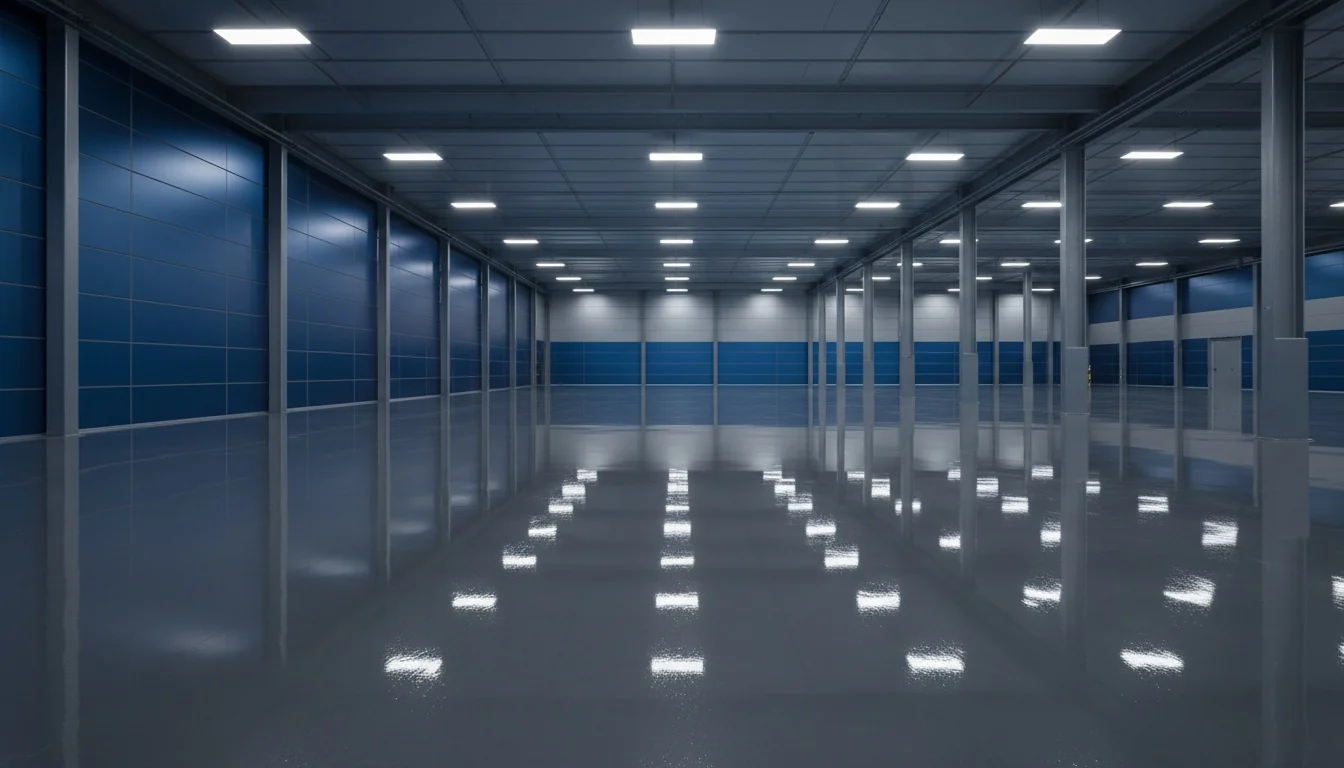
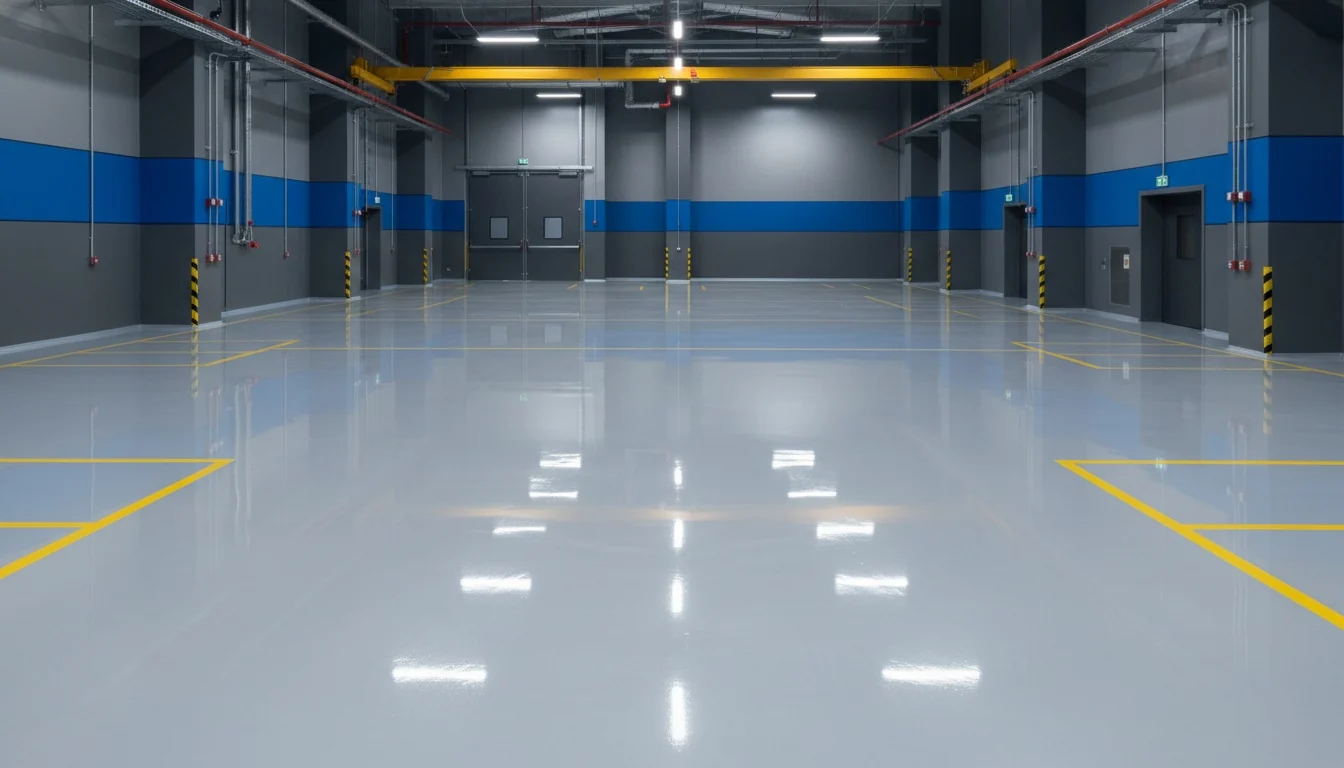
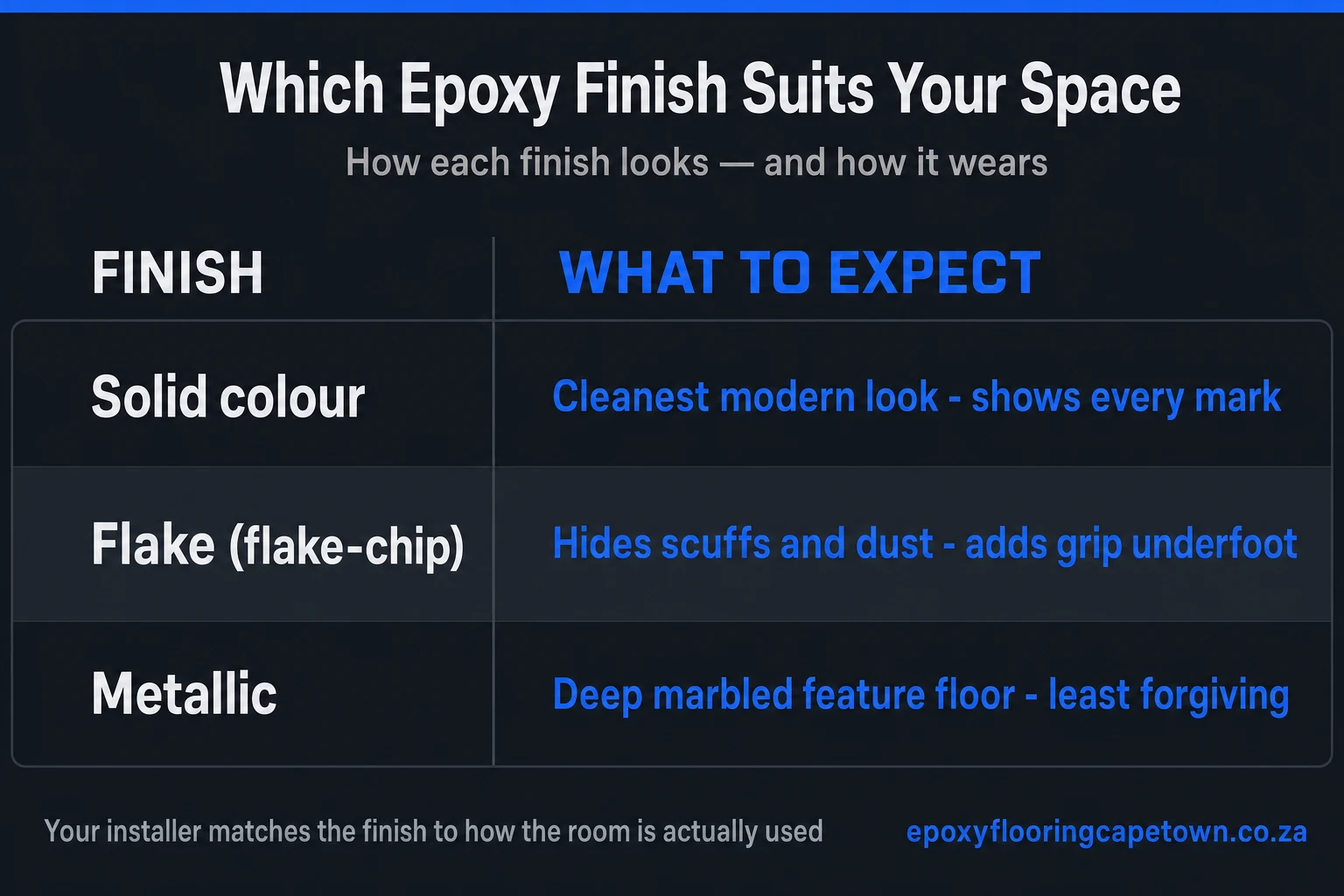
Solid-colour epoxy is the workhorse, and it is where most floors start. The pigment is mixed through the coating, so you get one even, seamless shade across the whole floor. The most popular epoxy floor colours in Cape Town are the neutrals — mid greys, deep charcoals and soft off-whites — because they read clean, suit almost any space and never date.
Grey is the default for good reason: it hides everyday dust and scuffs, works in a garage or a scullery, and pairs with any wall colour. Charcoal feels more deliberate and high-end, while a light or off-white floor brightens a dark room and bounces light around — handy in a small space, though it does show every mark. Blues are increasingly popular for garages and workshops, and a slate or steel blue can look striking against a white car or pale walls. And because solid epoxy is tinted to order, custom colours are entirely possible — an installer can match a specific shade, a brand colour or a sample you hand them.
Metallic effects
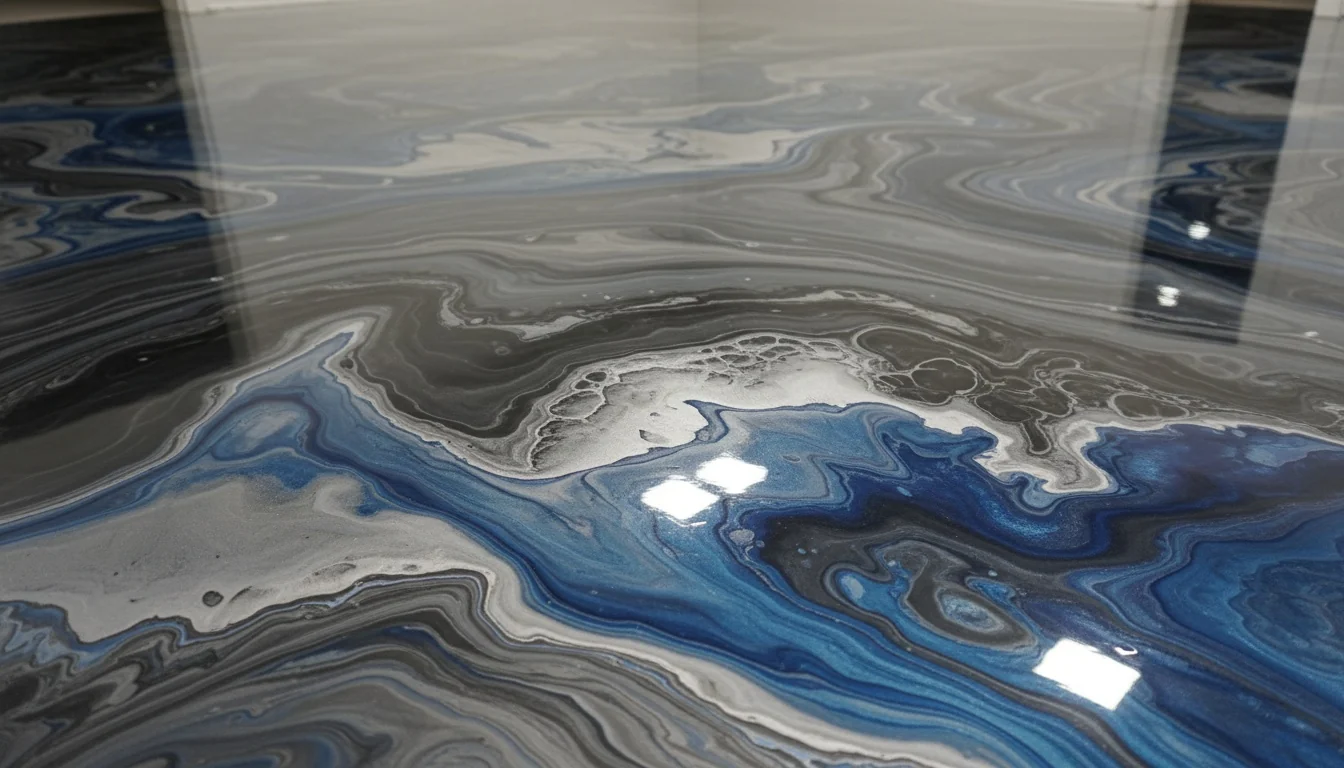
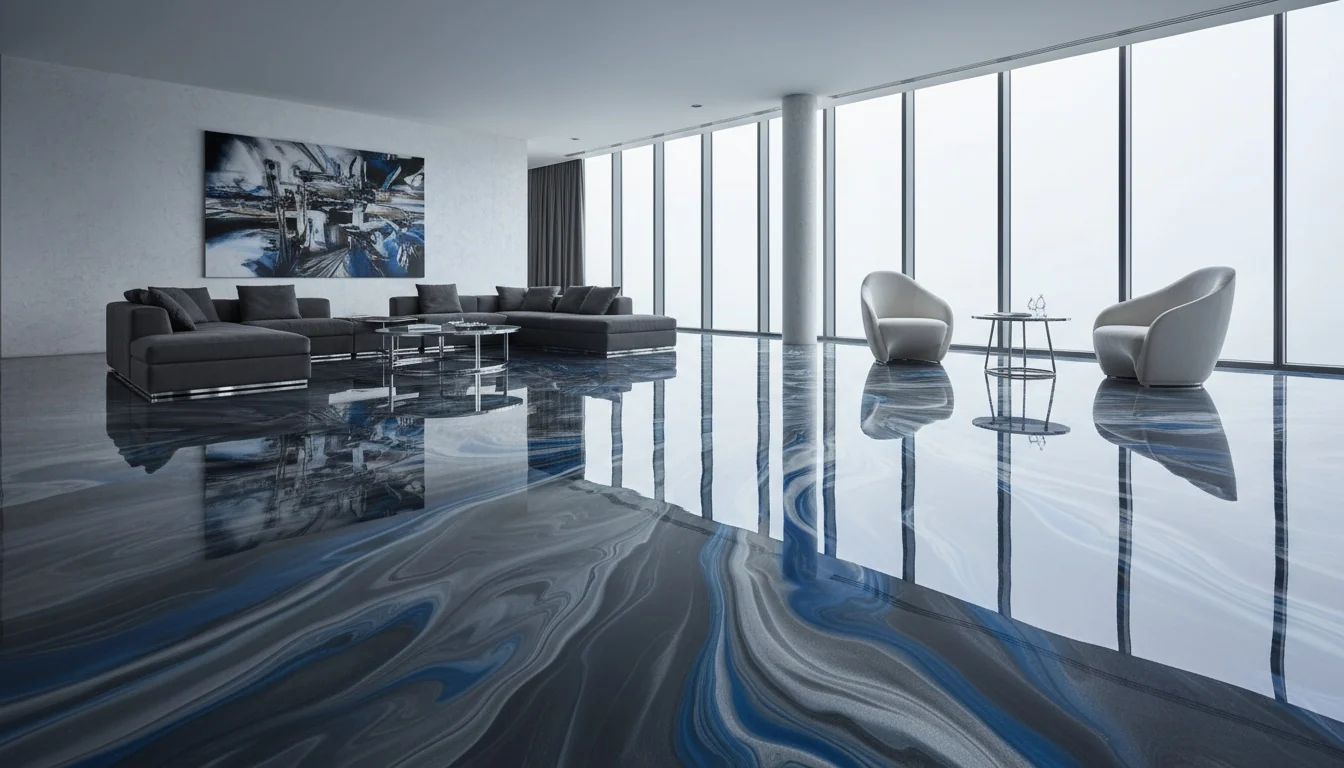
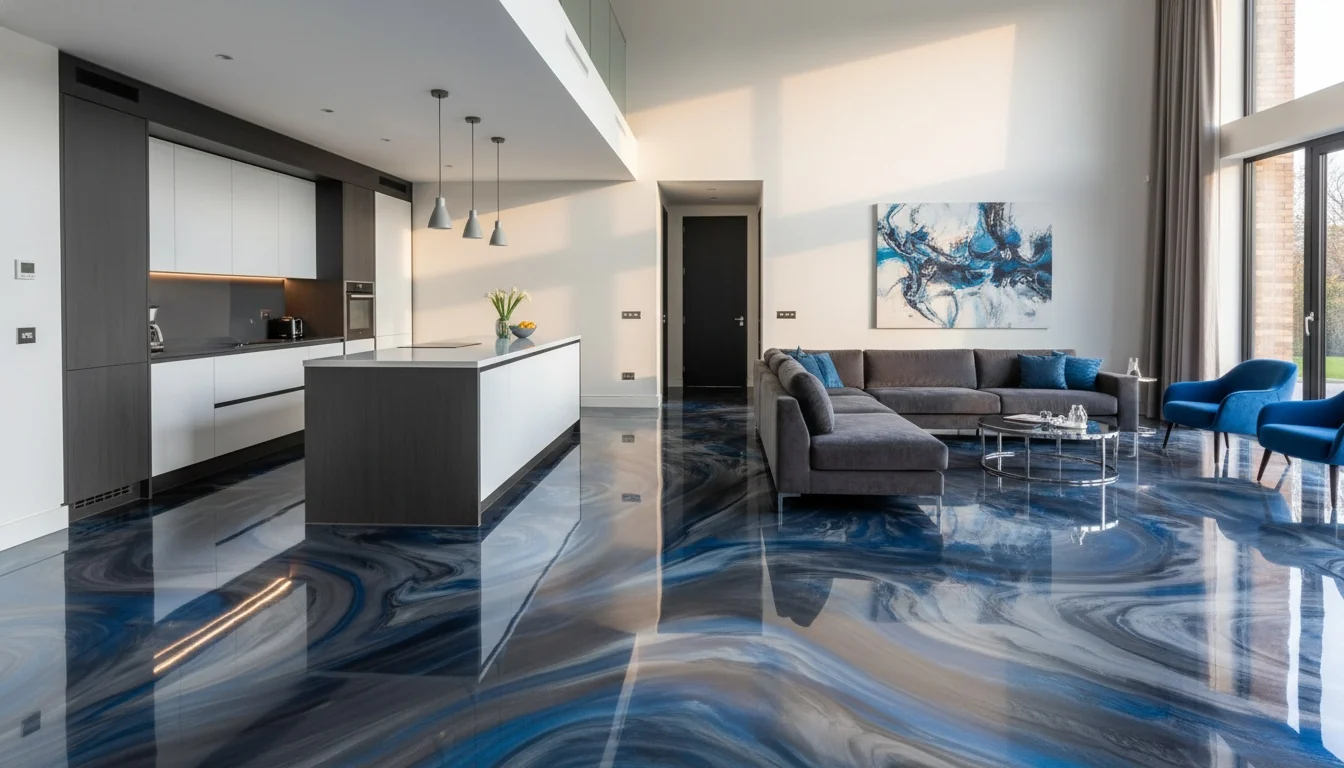
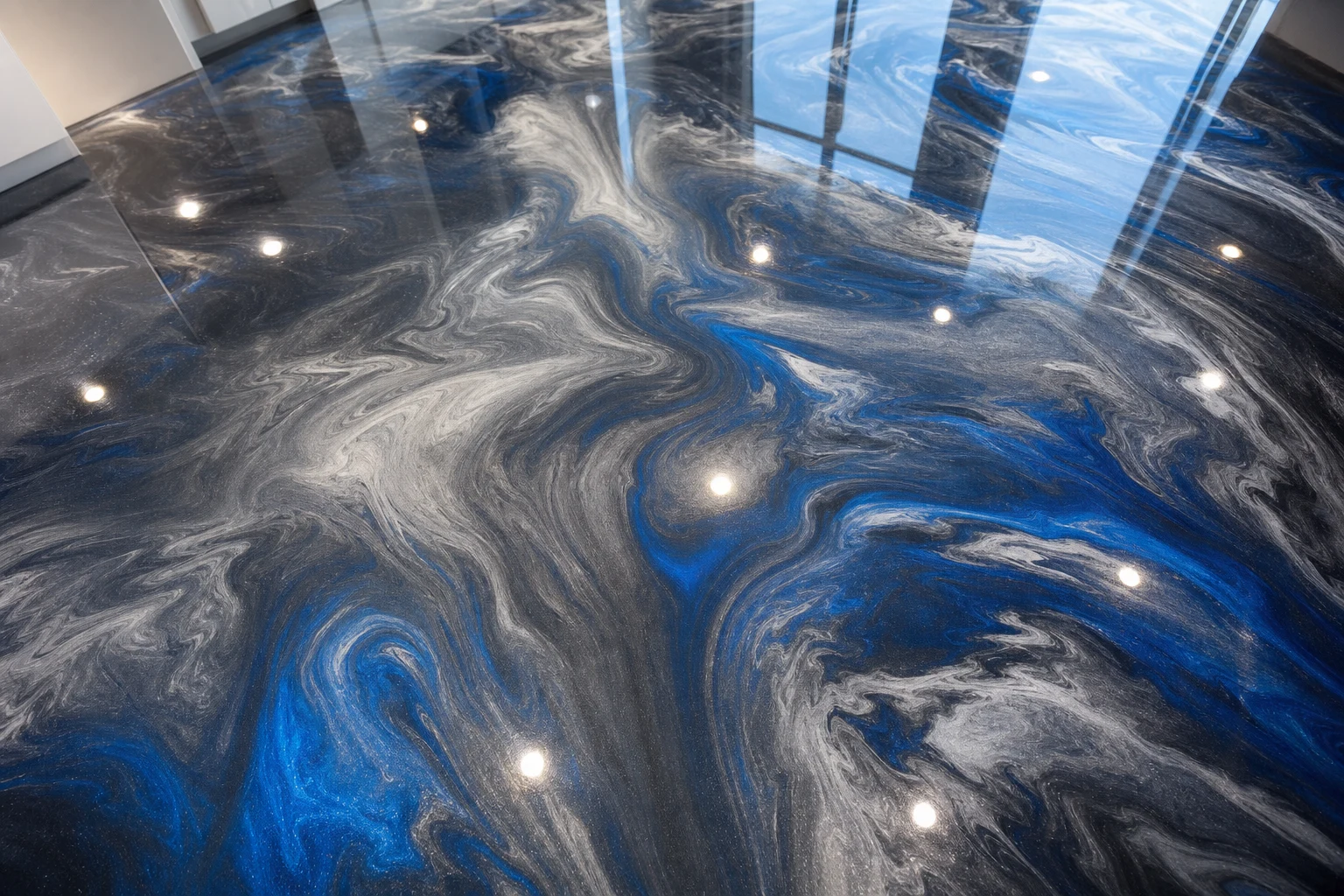
If solid colour is the workhorse, metallic epoxy is the showpiece. Fine metallic pigments are suspended in clear epoxy and then worked by hand while wet — rolled, blown and feathered — so the colour flows into marbled, rippled, three-dimensional patterns. The result is a seamless, poured-looking floor that reads like polished stone, liquid metal or moving water, and no two floors ever come out the same.
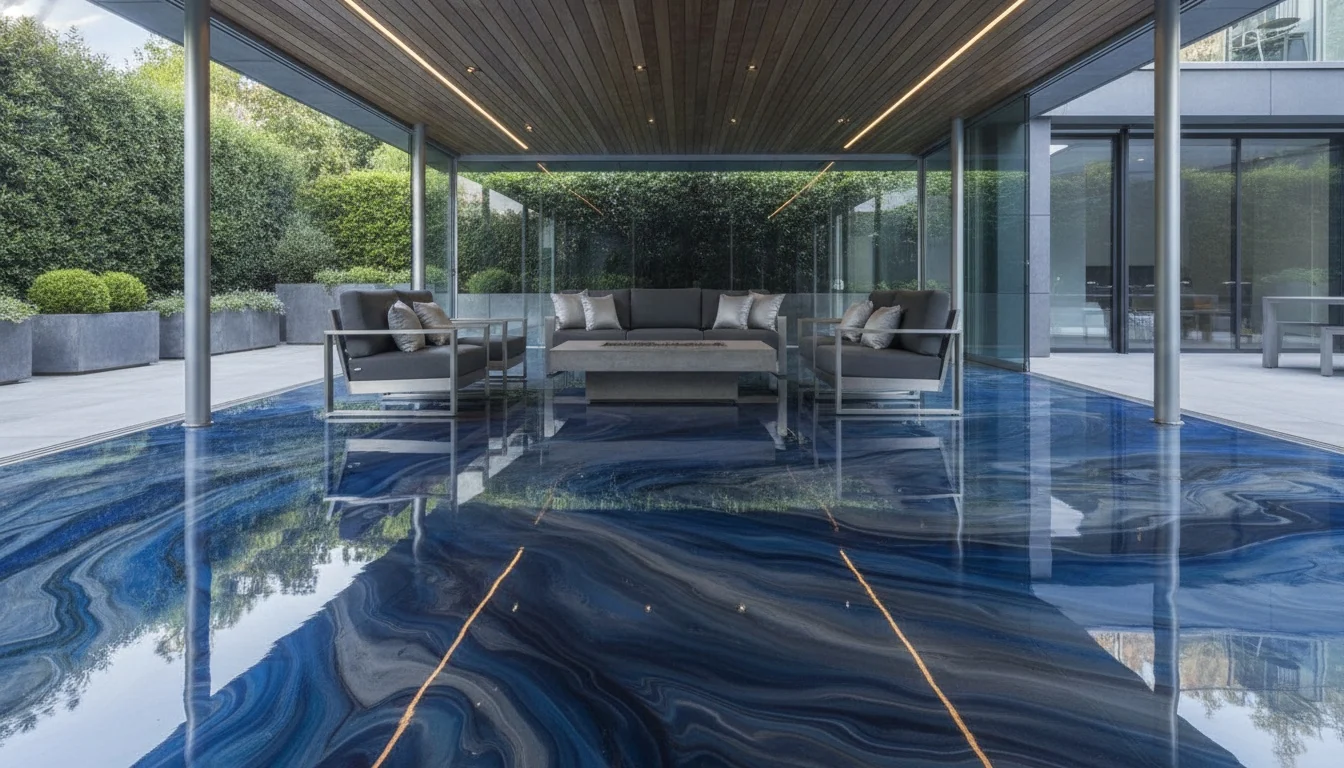
Metallic epoxy looks suit entrances, open-plan living areas, showrooms and feature floors far more than heavy-duty garages. Silver and pewter give a cool, modern marble effect; copper and bronze bring warmth; blues and teals create a deep, almost oceanic look. You can keep it subtle with a single tone or go dramatic with two or three colours marbled together. It is the most decorative end of the range — see the full picture on our metallic epoxy flooring page.
Flake and chip blends
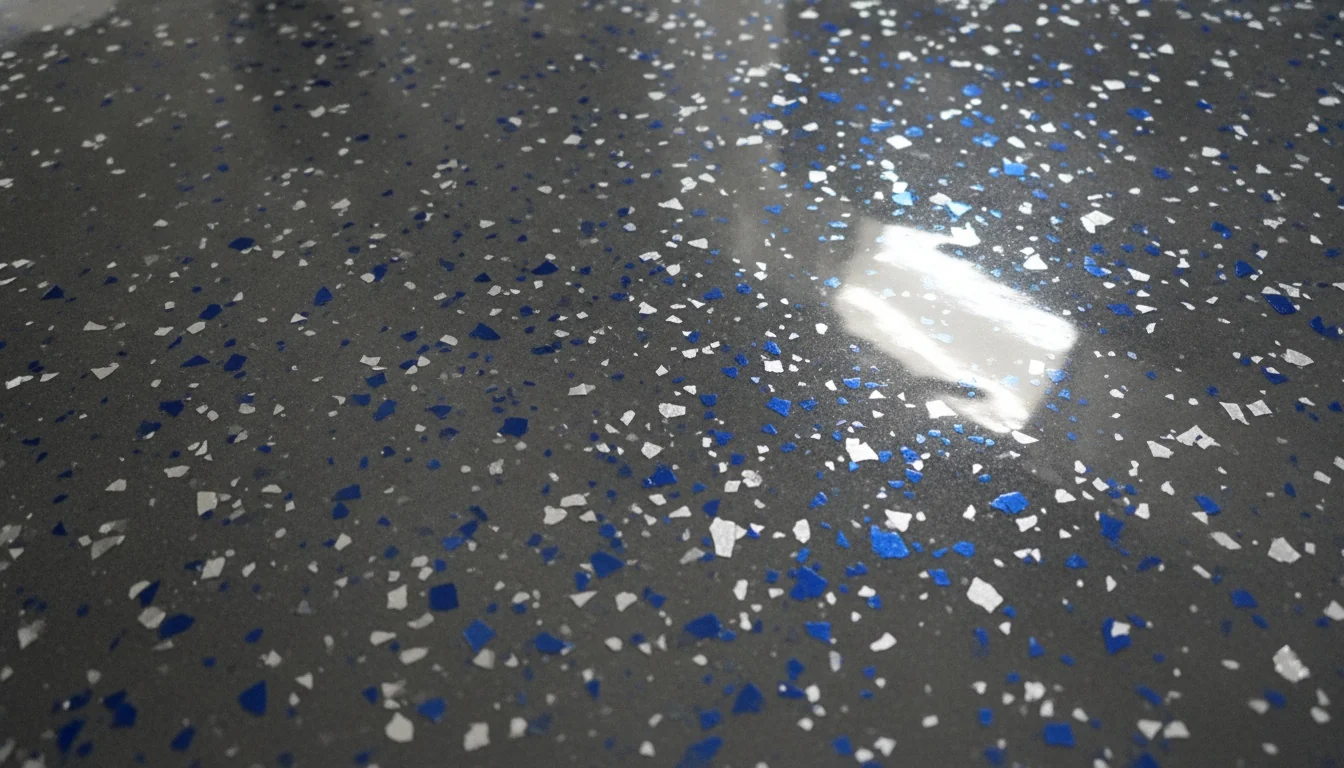
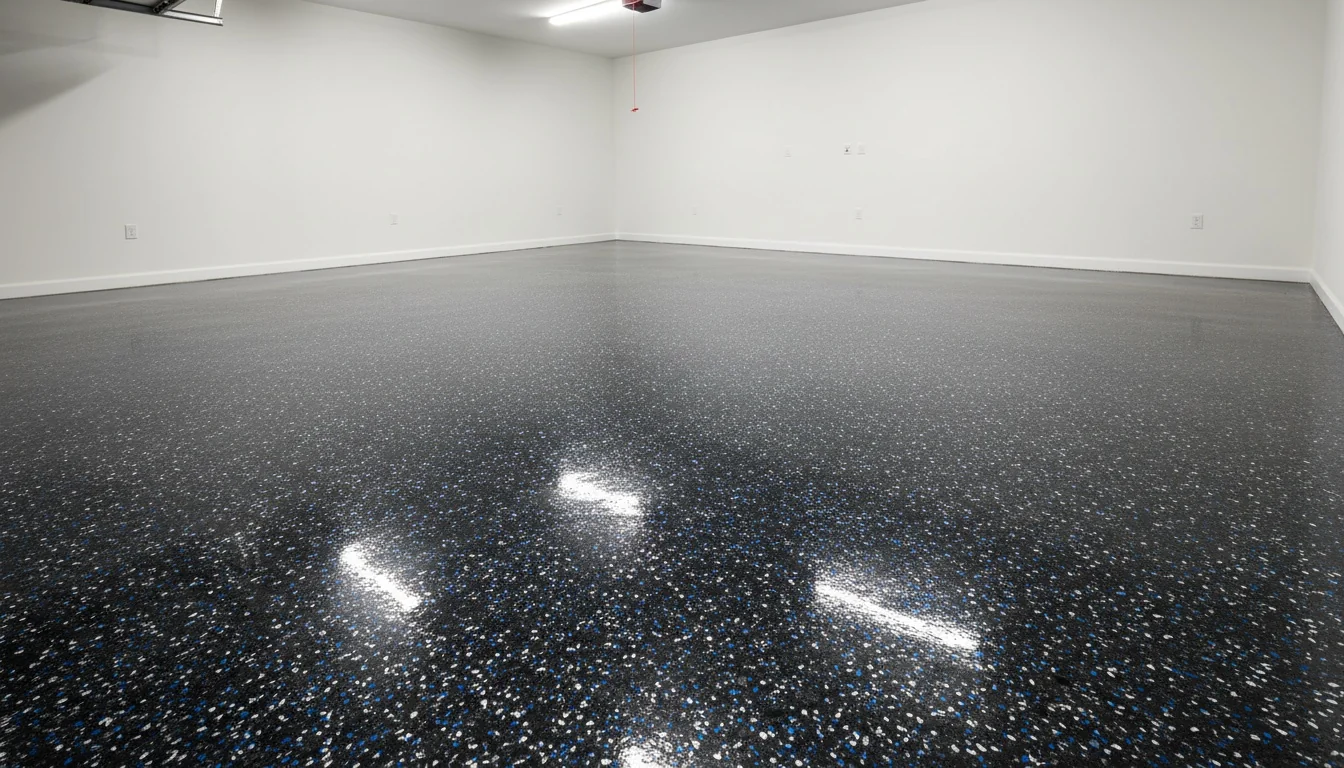
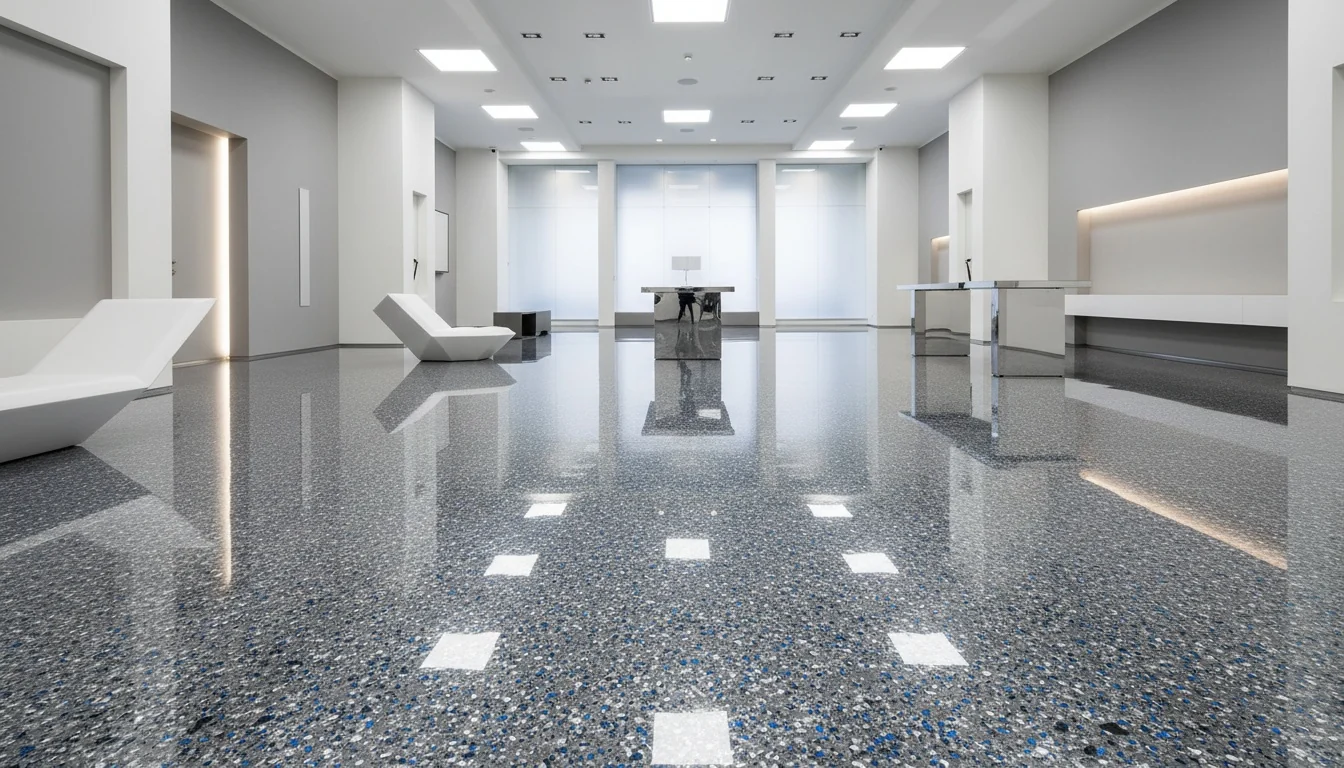
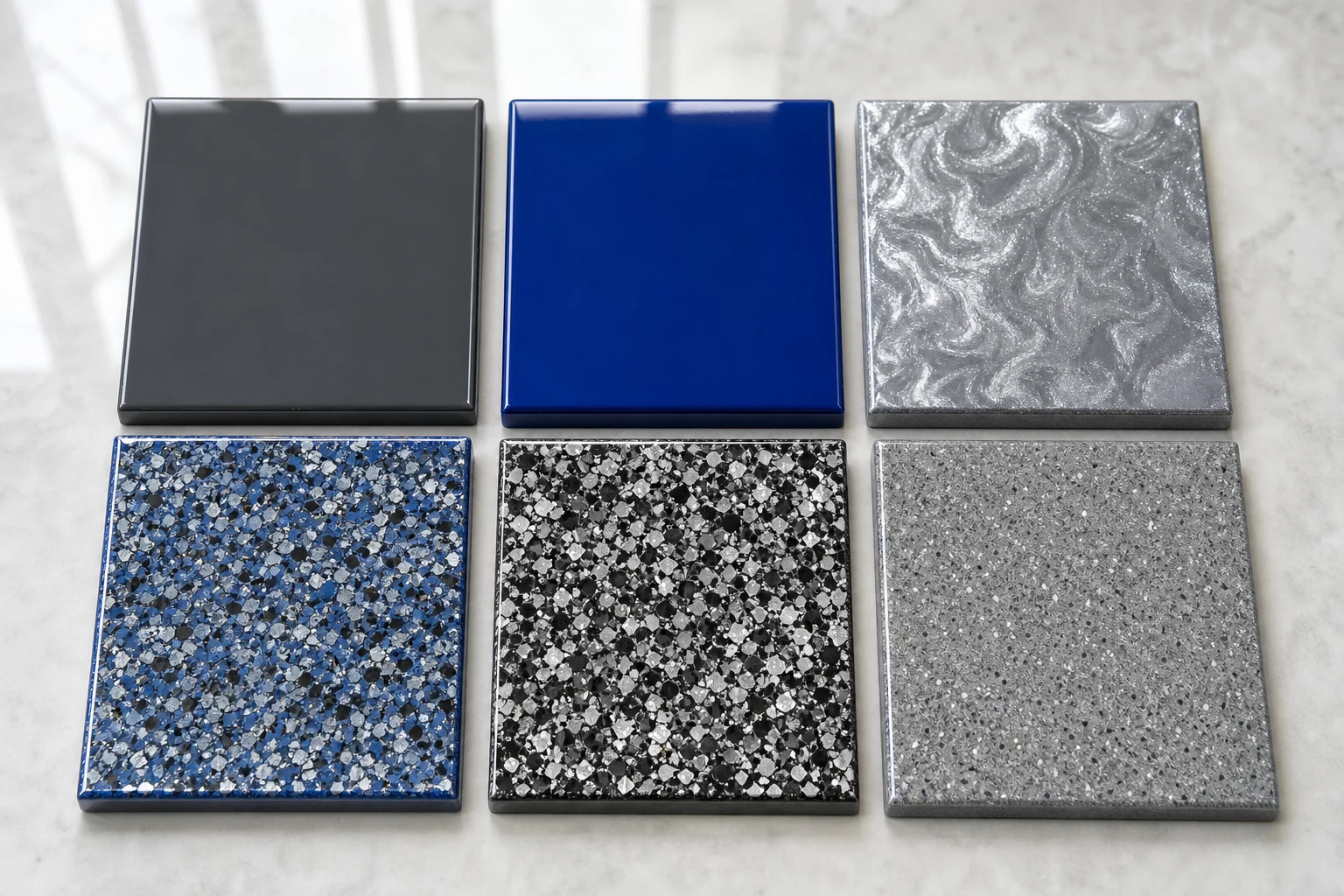
Flake-chip floors sit between solid colour and metallic for both looks and practicality. Coloured vinyl chips are scattered onto a base coat and then sealed under clear epoxy, giving a speckled, terrazzo-style finish with real depth. The clever part is what those flake colour blends do for you day to day: the multi-tone speckle breaks up the surface so dust, small chips, hairline scratches and tyre marks simply disconnect into the pattern instead of standing out.
That makes flake the go-to for garages, sculleries, laundries and busy family spaces. Blends are built from a base colour plus accent chips — a grey base with black and white flecks reads neutral and forgiving, while warmer tan and earth blends suit homes that want less of an industrial feel. You can also dial the density up or down, from a light scatter that hints at texture to a full broadcast that covers the base entirely. For the range of blends and how they wear, see our flake-chip floors page.
Gloss levels: high-gloss vs satin and matt
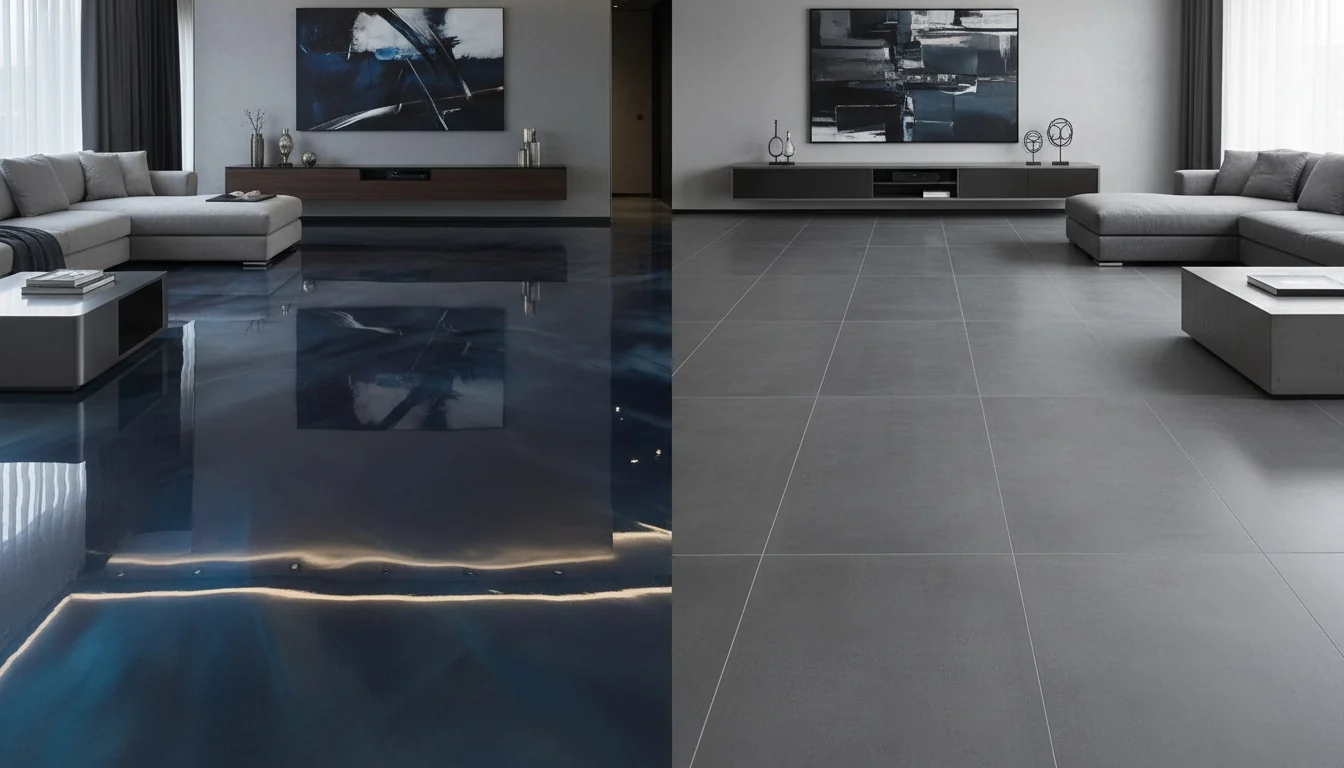
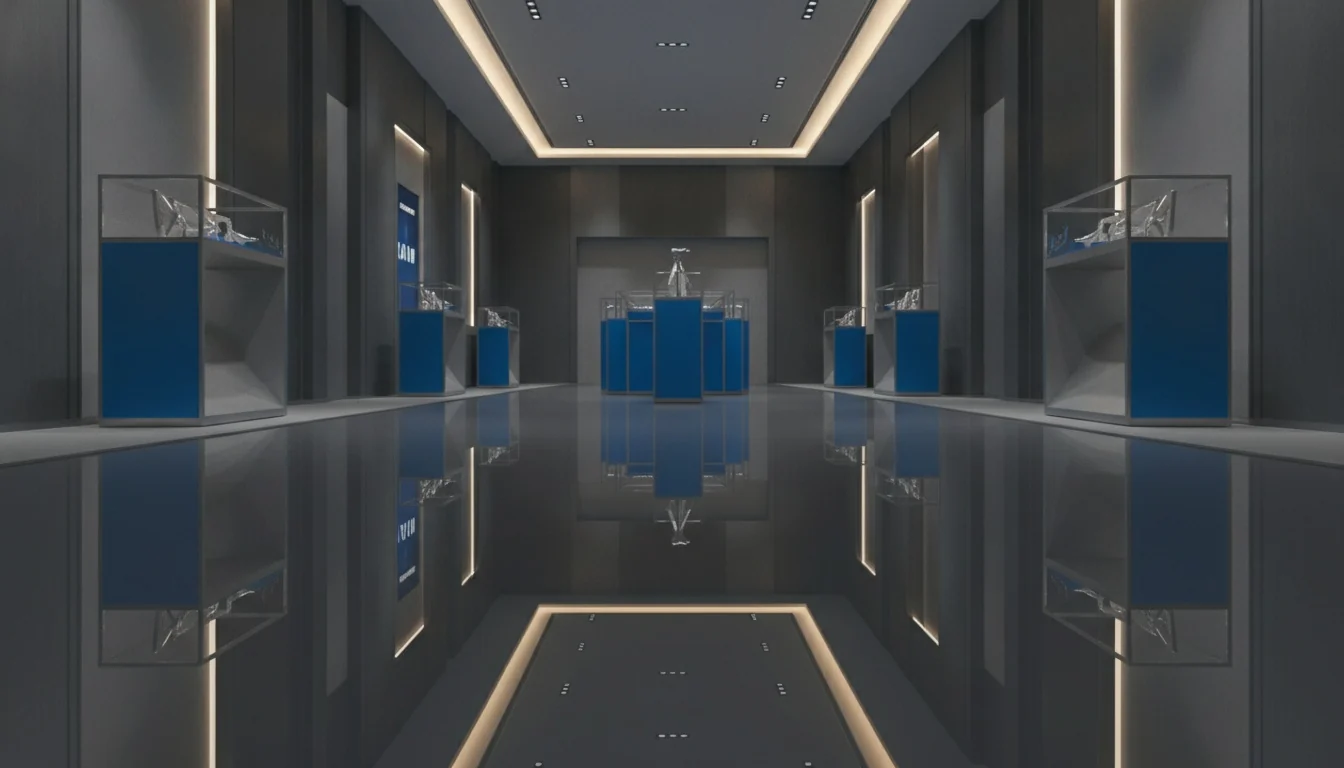
Colour is only half the story — the gloss level changes the entire character of the floor. High-gloss is the classic epoxy look: a mirror-like shine that makes colours pop, reflects light around the room and gives that showroom, polished-stone feel. It is the natural partner for metallic floors and upmarket living spaces.
A satin or matt finish dials the shine right down for a softer, more understated surface. Lower gloss feels calmer underfoot in a home, shows fewer footprints and smudges, and can hide minor surface imperfections that a high-gloss floor would highlight. Satin is also less slippery underfoot when wet, which is worth considering for sculleries and pool surrounds. Same colour, very different mood — so it is worth deciding the gloss level alongside the colour, not as an afterthought.
Choosing a colour for the room and the light
The biggest mistake is picking a colour off a chart without thinking about where it is going. Three things should steer the decision: the size of the space, how the room is used, and the natural light. Cape Town light is bright and direct, especially on north-facing rooms and anything near a big window or roller door, and that strong light changes how a colour reads. A grey that looks soft in a showroom can look almost white in a sun-flooded garage, while a deep charcoal that feels heavy in a small dark room can look perfect in a bright, open one.
In small spaces, lighter solid colours and higher gloss open the room up and make it feel bigger and brighter. In large open areas you have room to be bolder — a metallic feature floor or a richer solid colour holds its own. For garages and workshops, lean towards mid greys, charcoals and flake blends that hide marks and cope with traffic. For living areas, entrances and feature spaces, metallic and high-gloss solid colours earn their place. And remember epoxy can be UV-sensitive: for any floor in constant direct sun, ask your installer to add a UV-stable topcoat so the colour holds.
Combining finishes
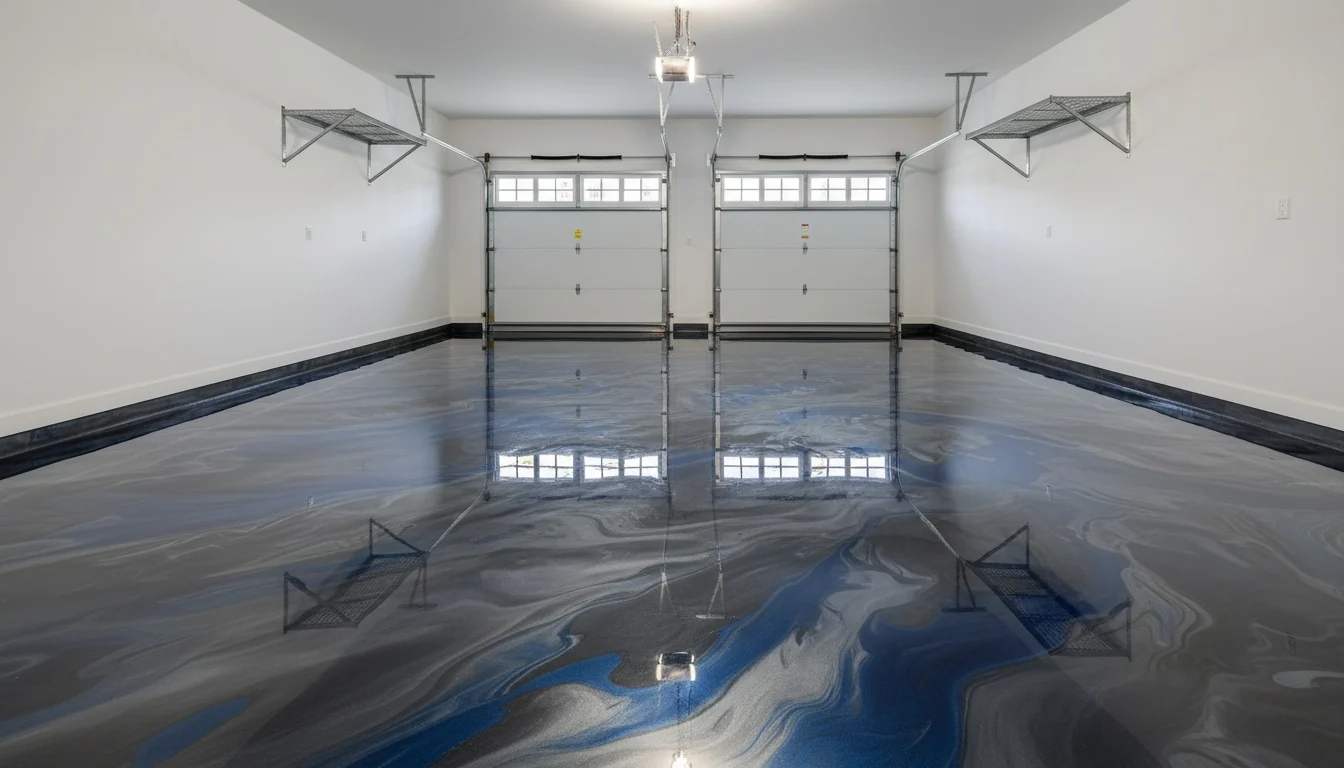
You do not have to choose just one look for the whole property. Some of the best epoxy design ideas come from combining finishes room by room. A common Cape Town setup is a marbled metallic floor in the entrance or open-plan living area for impact, with a hard-wearing flake-chip floor in the garage where durability and mark-hiding matter most. Sculleries and laundries often take a simple solid colour in a satin finish, while a covered patio might match the indoor floor to tie the spaces together.
You can also combine within a single floor — a solid border around a metallic centre, a colour change to zone a workshop bay, or a logo or feature inlay set into the coating. The key is to let each space lead: match the finish to how the room is used and lit, rather than forcing one look everywhere.
How to choose your epoxy colour
Pulling it together: start with the room, not the colour swatch. Decide how the space is used and how much light it gets, then choose a finish family — solid for clean simplicity, flake for hard-wearing and mark-hiding, metallic for a decorative showpiece. Pick a colour that suits the light and the size of the room, settle on a gloss level for the mood you want, and only then lock in the exact shade. An experienced installer will look at the actual space, the light and your furniture or vehicle, and confirm the colour, blend and gloss on-site before anything is applied. As a rough guide, finished epoxy floors in Cape Town typically run from around R250 to R750 per m² depending on the system and finish — our pricing breakdown shows what shapes the figure, and the easiest next step is a free on-site quote where the colour decision gets made properly with sample boards in the actual light of the room.