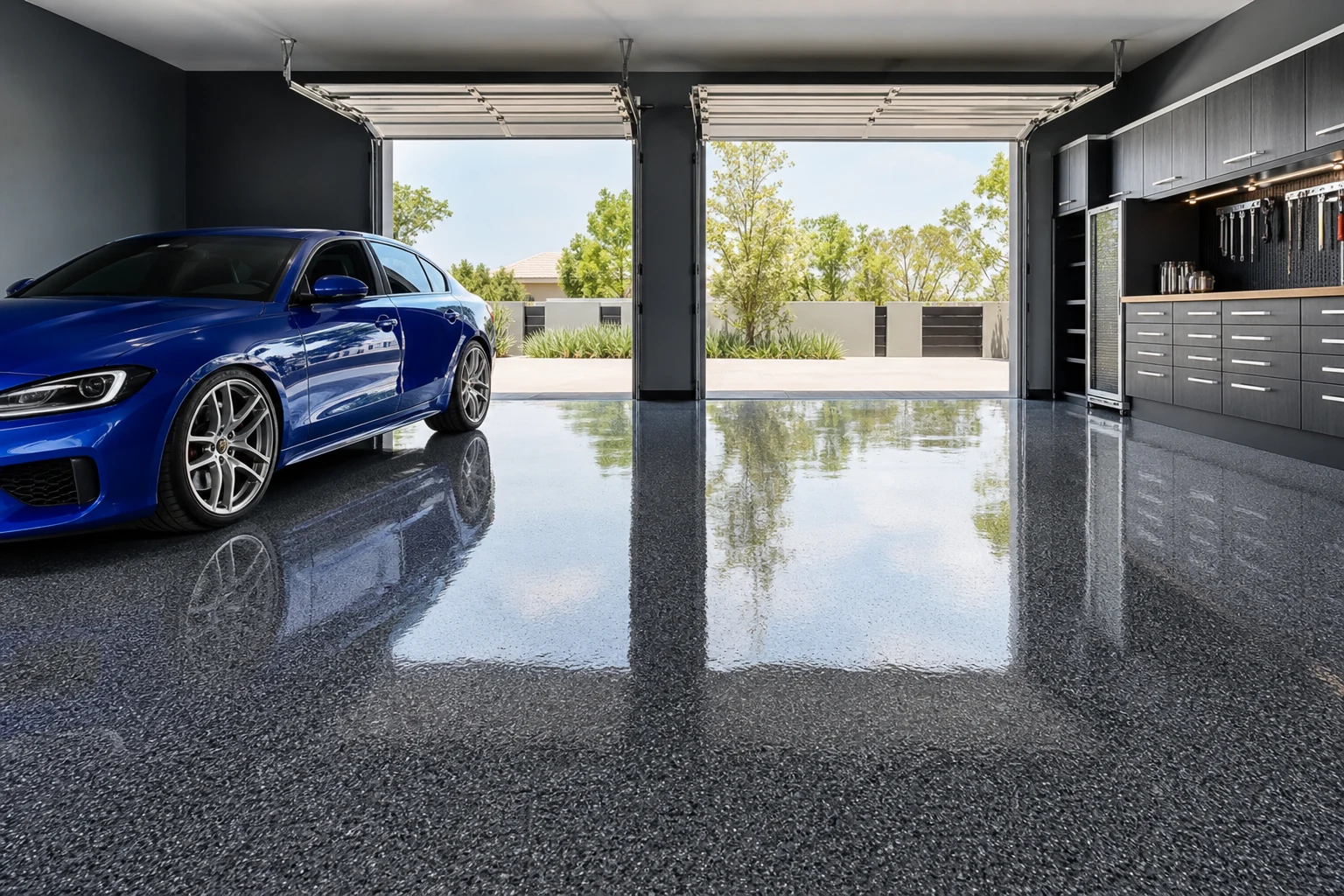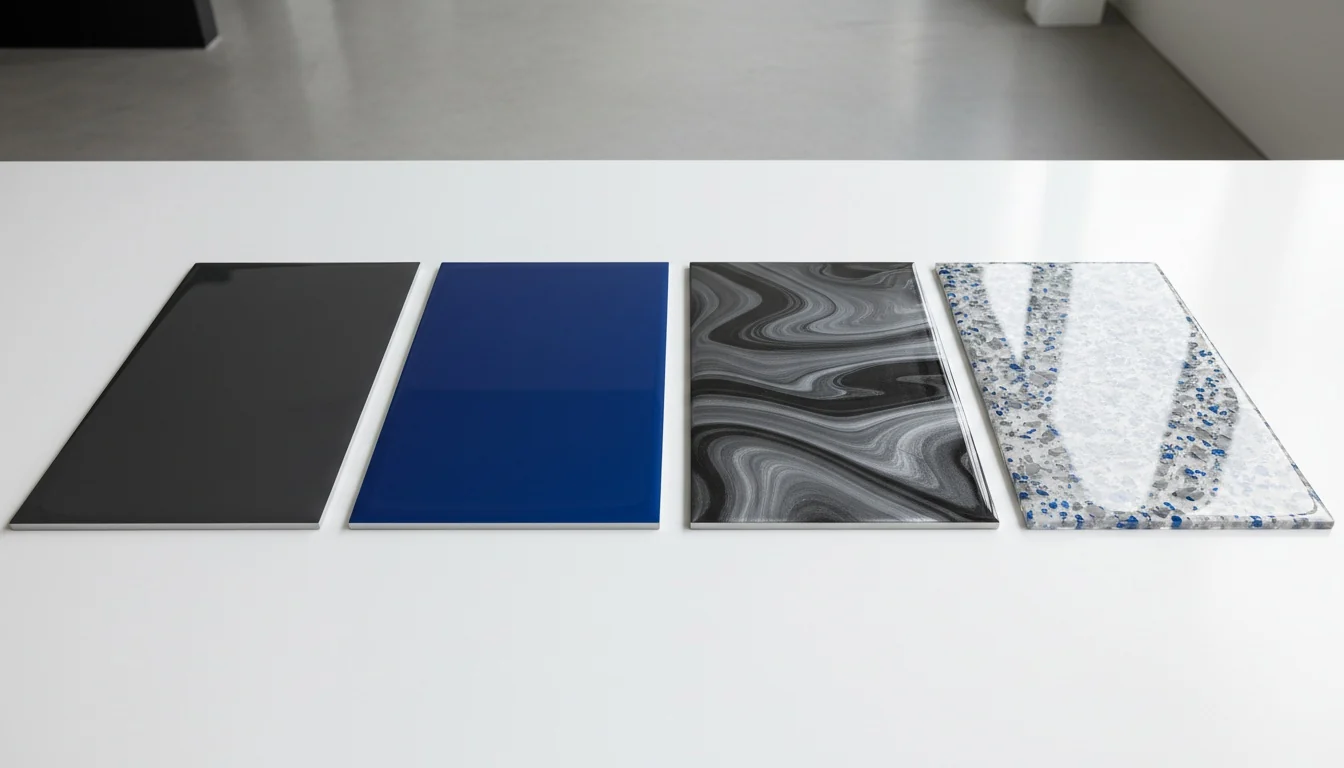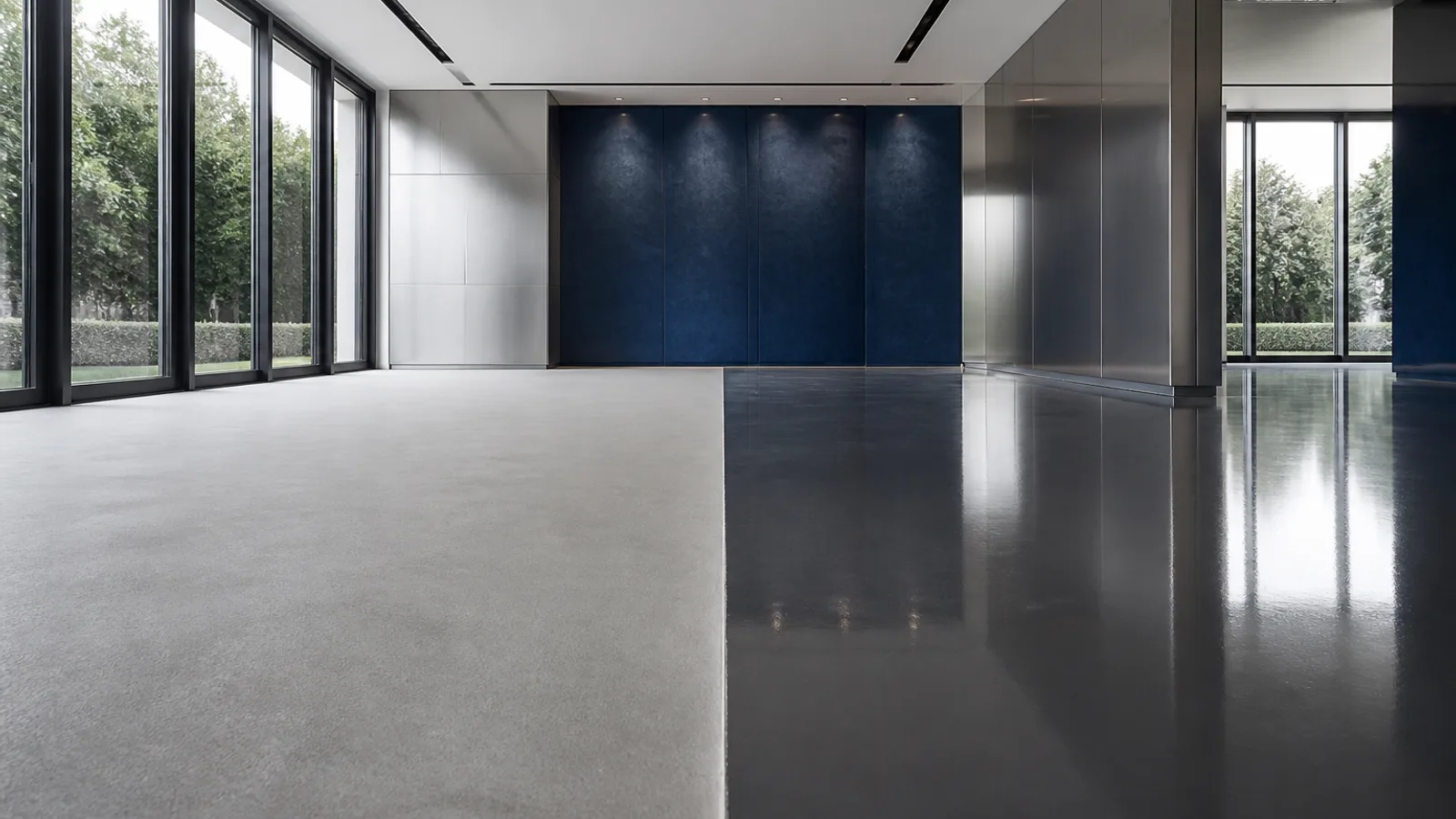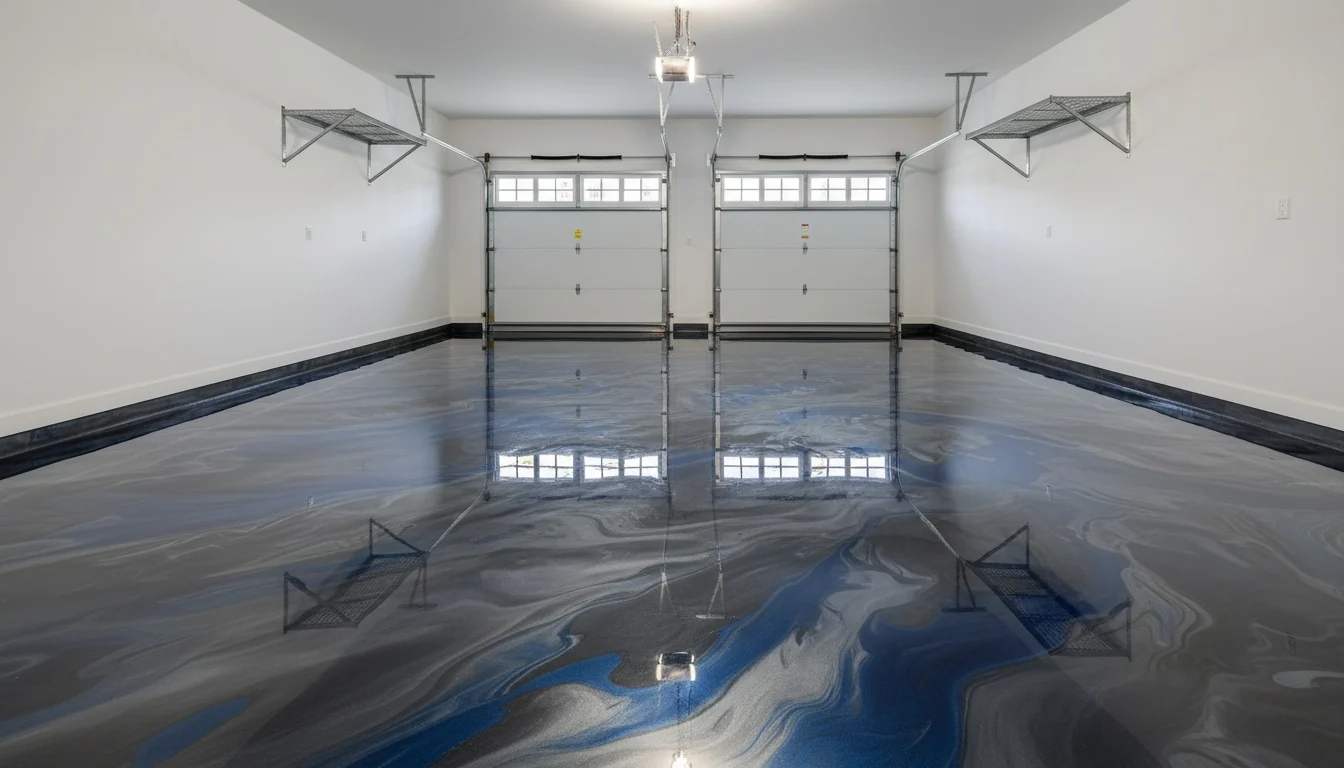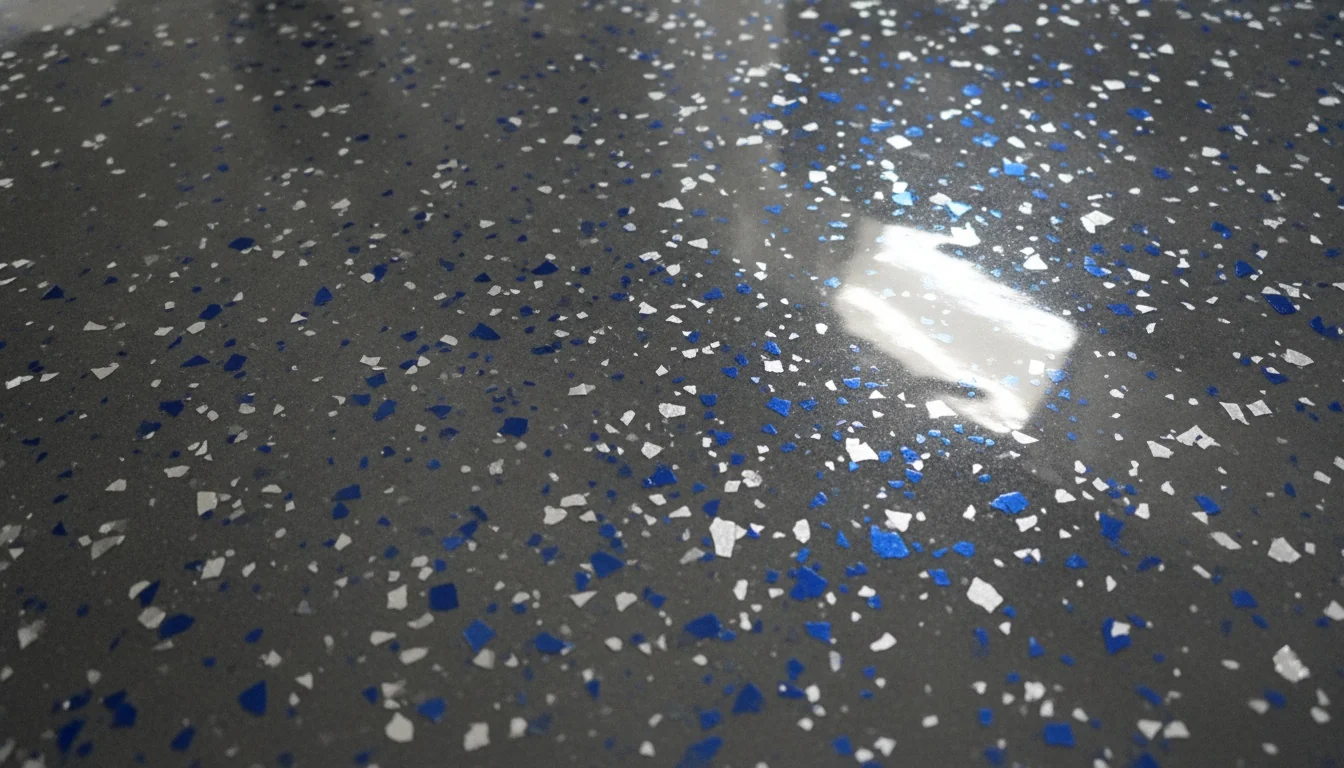

If you have been pricing up a hard-wearing floor for your garage, workshop or patio, you have almost certainly come across epoxy flake flooring — the speckled, terrazzo-style finish you see on so many modern Cape Town garage floors. It is one of the most versatile resin systems available, blending good looks with real toughness and grip. This guide explains what a flake-chip floor actually is, how it is built up, why it hides marks and resists wear, and where it makes the most sense. If you already know you want one, you can jump straight to the flake epoxy flooring service and book a free on-site quote.
Key takeaways
- Flake epoxy is a layered system — a coloured basecoat, broadcast vinyl flakes, then clear sealing topcoats.
- The flakes do real work — they add grip and hide scuffs, dust and slab imperfections, not just decoration.
- It is naturally slip-resistant, with optional anti-slip aggregate for wet areas.
- You choose the colour blend, from subtle greys to bold multi-colour mixes.
- Priced between a plain coating and premium metallic — the flake itself and the extra clear coats are the difference.
What is flake (flake-chip) flooring?
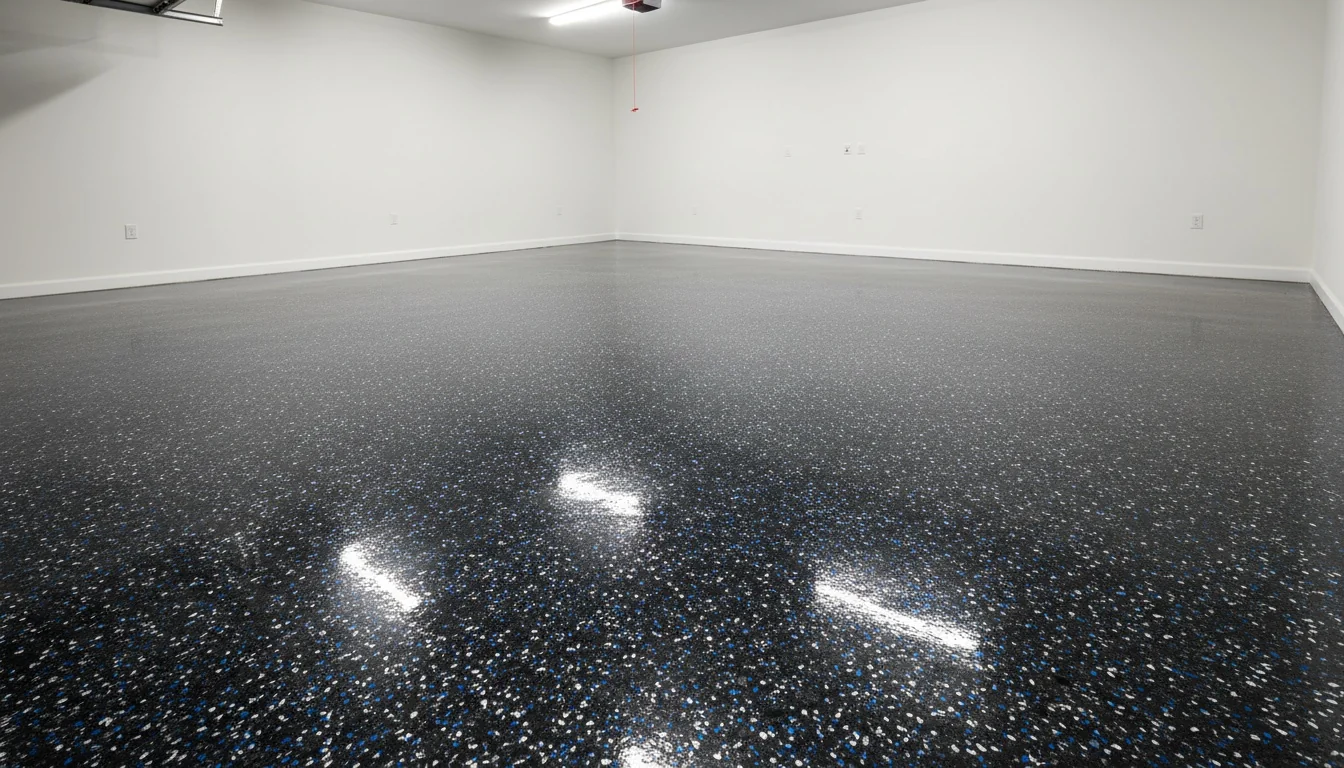
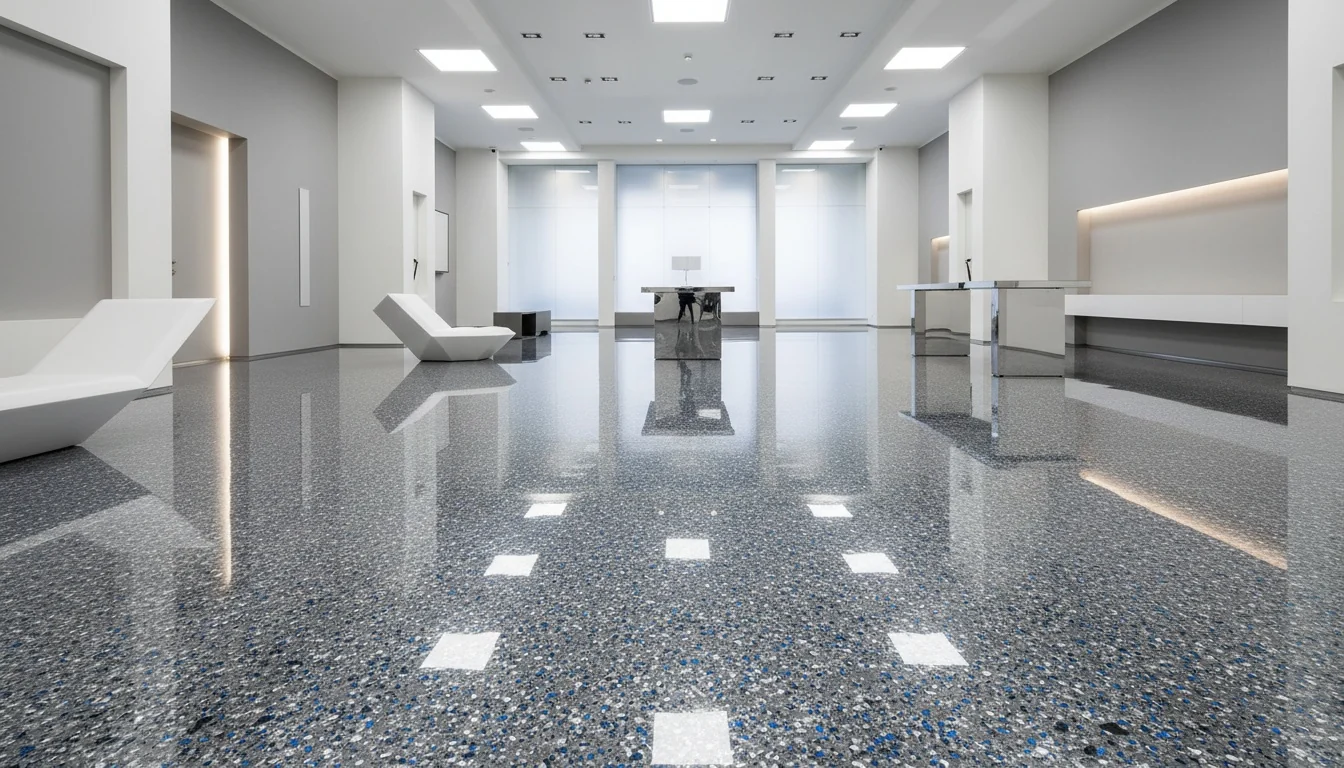
A flake-chip floor is an epoxy coating with decorative vinyl chips embedded in it. Those chips — the flakes — are small, flat flecks of coloured acrylic, usually a few millimetres across, that get scattered across a freshly laid epoxy basecoat. Once everything is cured and sealed, you are left with a dense, seamless surface flecked with colour, a bit like a speckled stone or terrazzo. People use a few names for the same thing: flake epoxy, flake-chip, chip-and-seal, or simply a vinyl flake epoxy floor.
The point of the flakes is not only the look. Because the surface is covered in tiny flecks rather than one flat colour, it disguises the small marks and imperfections that a plain floor would show off. That is a big part of why a garage flake floor stays looking tidy even after years of tyres, tools and traffic.
How a flake floor is installed
The finish looks simple, but the build-up is what makes it last. A professional installation follows the same core sequence:
- Preparation: the concrete is diamond-ground to open the surface, cracks and pitting are repaired, moisture is checked and a primer goes down. Skipping this step is the most common reason cheap floors peel.
- Base coat: a coloured epoxy basecoat is rolled on. This is the bed the flakes sit in, so it has to be laid at the right thickness while still wet.
- Broadcast to refusal: the installer throws vinyl flakes into the wet basecoat, building coverage up until the floor will not take any more — broadcasting "to refusal" — so no basecoat shows through.
- Scrape back: once cured, the loose, upstanding flake is scraped and lightly sanded off, leaving a smoother, even profile ready to seal.
- Clear topcoat: one or more clear coats are applied to lock the flakes in, giving the floor its depth, gloss and chemical resistance. Anti-slip can be added here.
Most garages and rooms are finished in one to two days on site, and you can usually walk on the floor about a day after the final coat, with vehicles back after roughly a week once it has fully cured.
Why it hides marks and resists wear
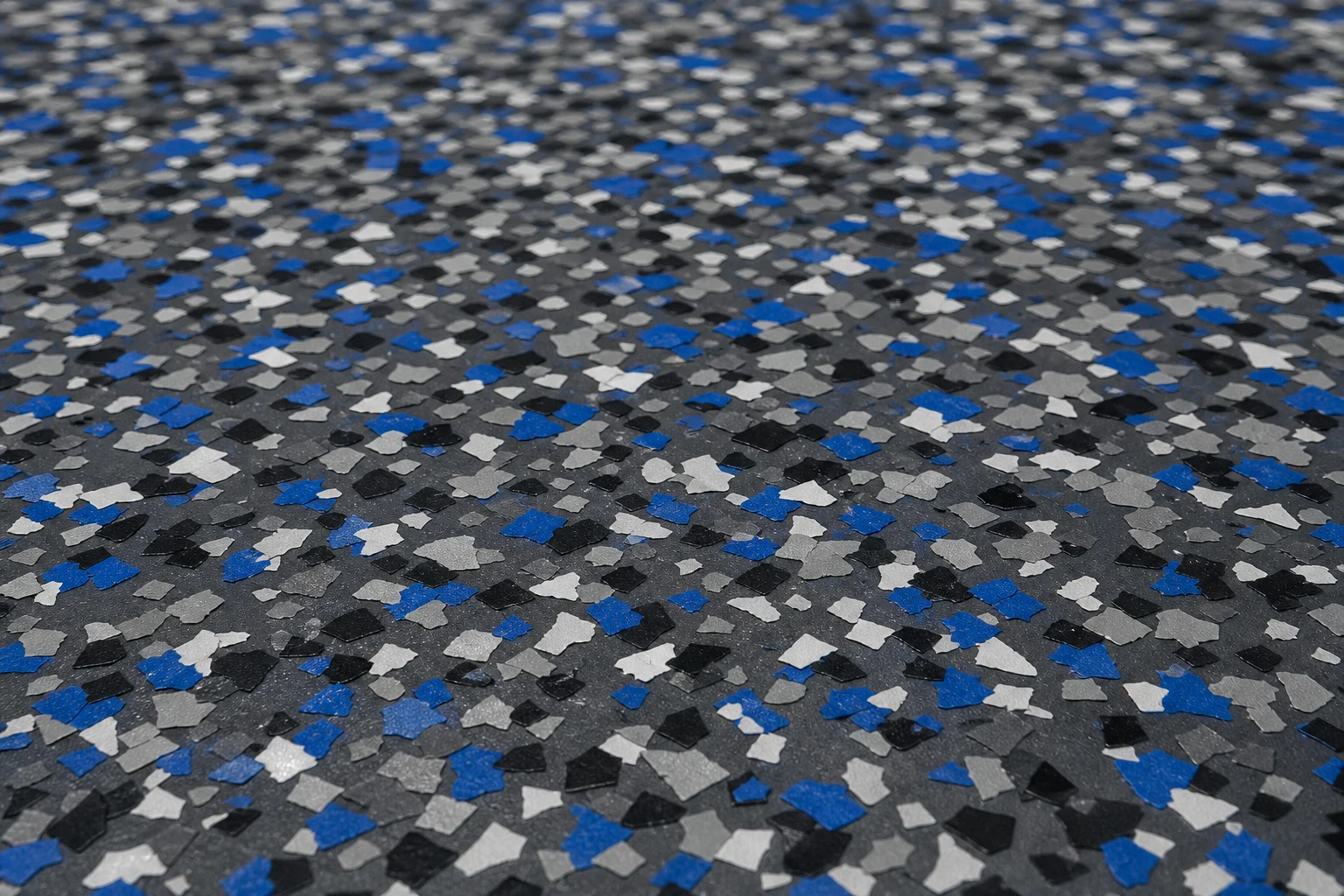
Two things make flake so forgiving. First, the speckled pattern breaks up your eye — instead of a single flat tone where every scuff stands out, the multi-tone fleck camouflages tyre marks, dust and minor slab flaws. Second, the system is genuinely tough: the cured epoxy and clear topcoats form a dense, seamless layer that resists abrasion, oils and household chemicals, and wipes clean with a mop or a hose. Because it is seamless there are no grout lines or joints for dirt to collect in. That combination — looks that forgive wear plus a surface that genuinely takes punishment — is why flake tends to outlast the painted-on coatings it is often compared with. If you want a sense of realistic lifespans, our guide on how long it lasts walks through what to expect.
The textured, non-slip benefit
A smooth gloss floor can get slippery when wet, which matters in a garage that sees rain off the car or a laundry that gets the odd splash. The flake broadcast leaves a fine texture across the surface that gives noticeably more grip underfoot than a flat coating — without feeling rough or hard to clean. Where extra traction is needed, an installer can broadcast a fine anti-slip aggregate into the final clear coat, dialling the grip up for covered patios, kitchens and wet work areas. It is a small spec choice that is worth raising when you get your quote.
Colour blends
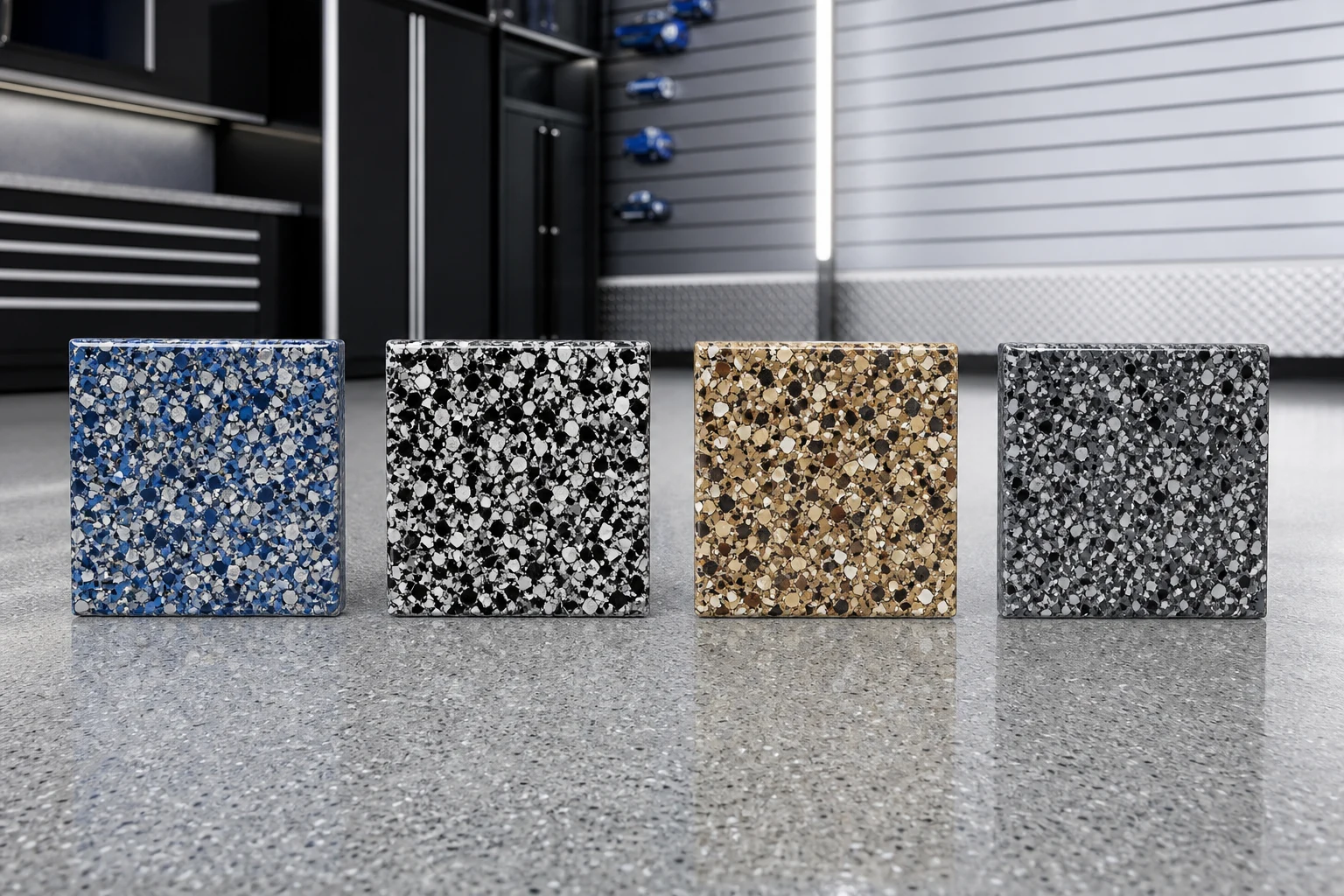
One of the quiet pleasures of flake is the choice. Flakes come in pre-mixed blends and you can lean subtle or bold. Soft grey, charcoal and earth-tone blends read as understated and modern, and hide dust well — a safe bet for a home garage. Brighter or multi-colour blends suit showrooms, gyms and retail floors that want some personality, and you can even nod to a brand or team palette. Because the flake covers the basecoat almost completely, the blend you pick is what sets the whole mood of the floor, so it is worth seeing samples in the actual light of the space.
Where flake epoxy suits
Flake is the all-rounder of the epoxy world, which is why it turns up almost everywhere:
- Garages — the classic use. Grip for wet tyres, a finish that hides marks, and a clean, finished look. If you are weighing it up, see whether to epoxy your garage, and the dedicated garage floor epoxy page.
- Patios and covered outdoor areas — the texture adds safety where surfaces get wet, and the sealed finish shrugs off the weather under cover.
- Workshops and storerooms — tough enough for trolleys, dropped tools and foot traffic, and easy to sweep or hose down.
- Laundries, kitchens and pet areas — wipe-clean, seamless and slip-resistant, with no joints for grime to hide in.
It also works well in retail, gym and light-commercial settings where a floor has to look sharp and survive constant use.
What moves the price
Flake sits between a plain solid-colour coating and a premium metallic one. The extra cost over solid colour comes from the flake itself plus the additional clear coats needed to lock it in and build the finish. Within flake, the things that shift the figure are how dense the broadcast is — a full-broadcast floor uses considerably more material than a light scatter — whether extra anti-slip or clear coats are specified, and how much preparation your slab needs before anything goes down.
Current per-square-metre ranges for flake and every other system are set out on our epoxy flooring price guide. Treat those as a starting point only: the honest number always comes from an installer measuring the actual floor.
The bottom line
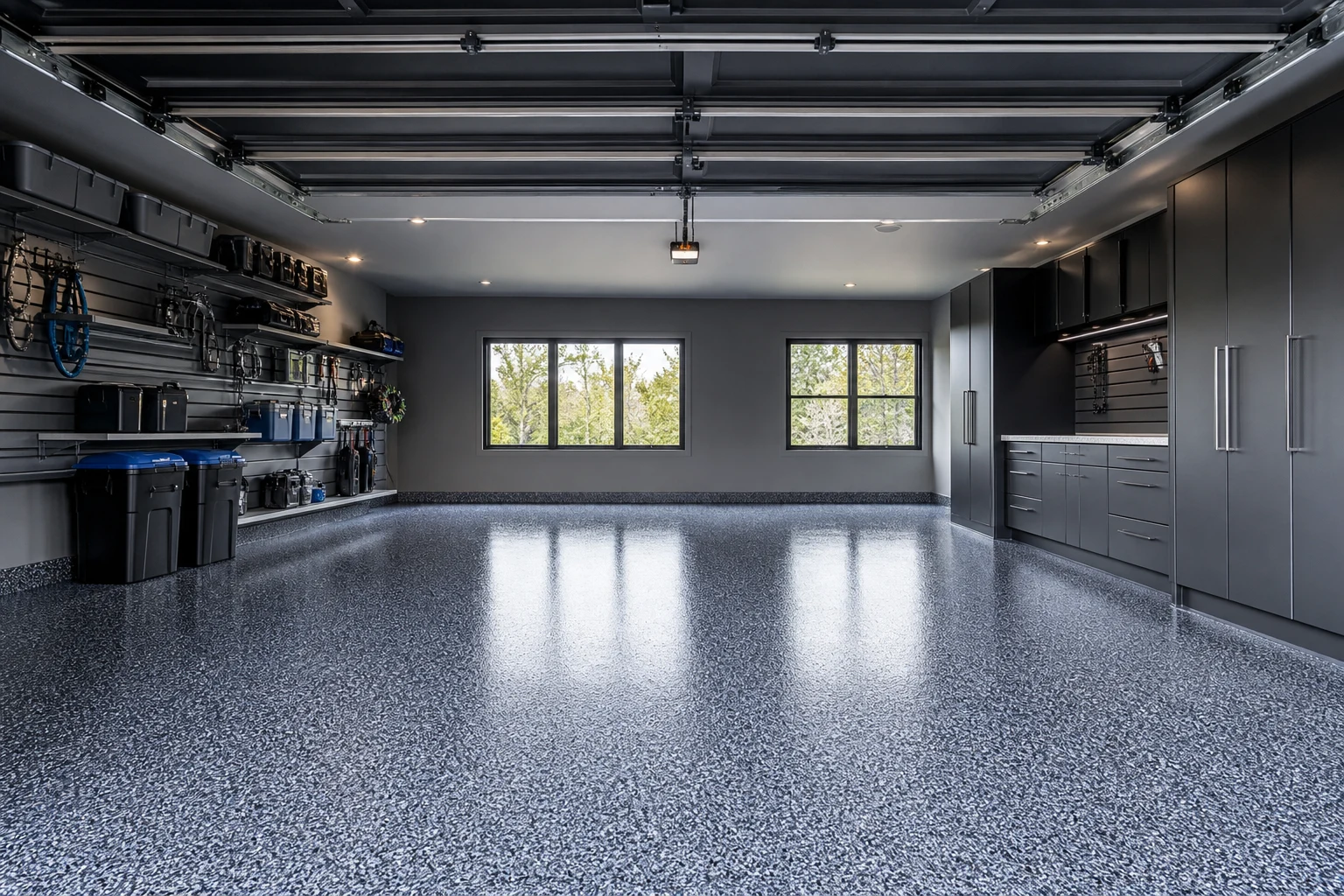
Flake epoxy earns its popularity. It looks far better than a bare or painted slab, the texture gives you grip where you need it, the speckled finish forgives the marks of daily life, and the sealed surface cleans up in minutes. For most Cape Town garages, workshops and patios it is the sensible default — tough, good-looking and not as dear as the premium options. When you are ready, we can measure your space, talk you through flake blends and give you a firm written price at no cost — so you can compare finishes and get a real number for your floor.