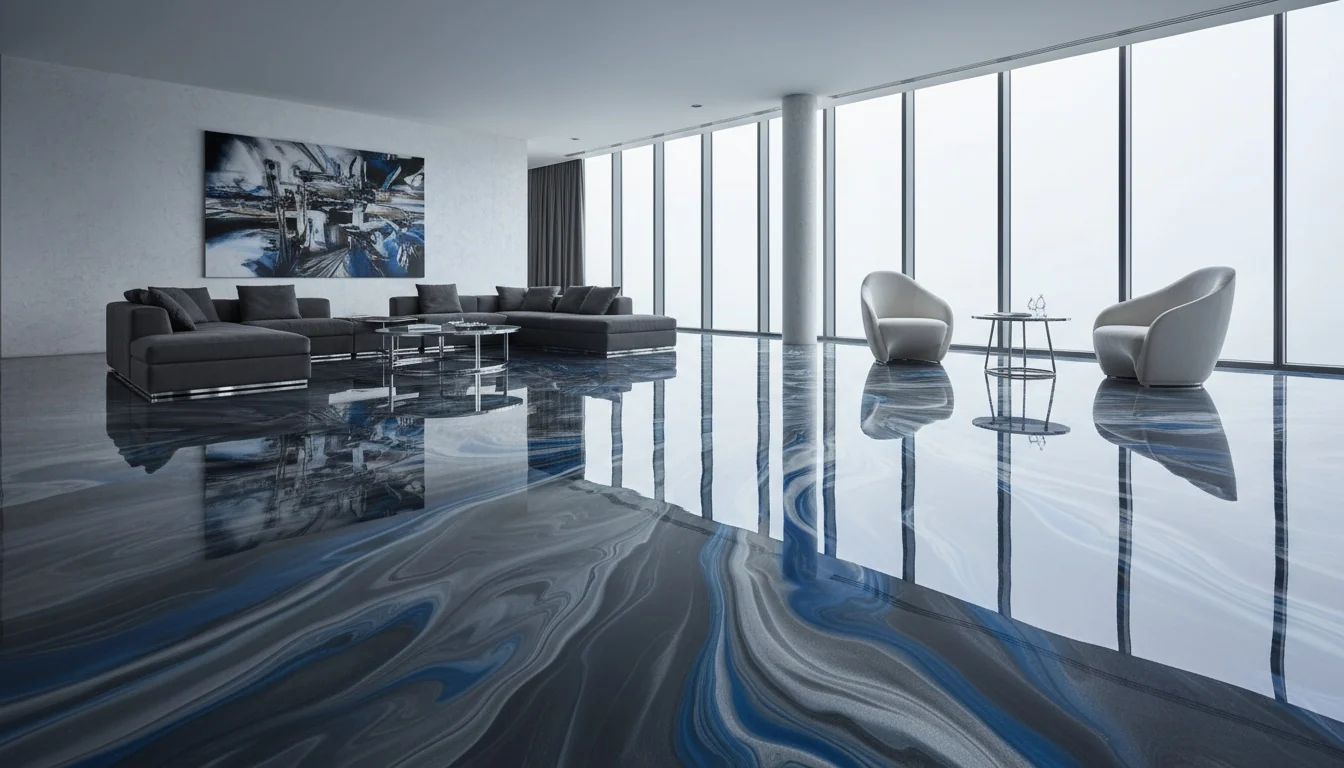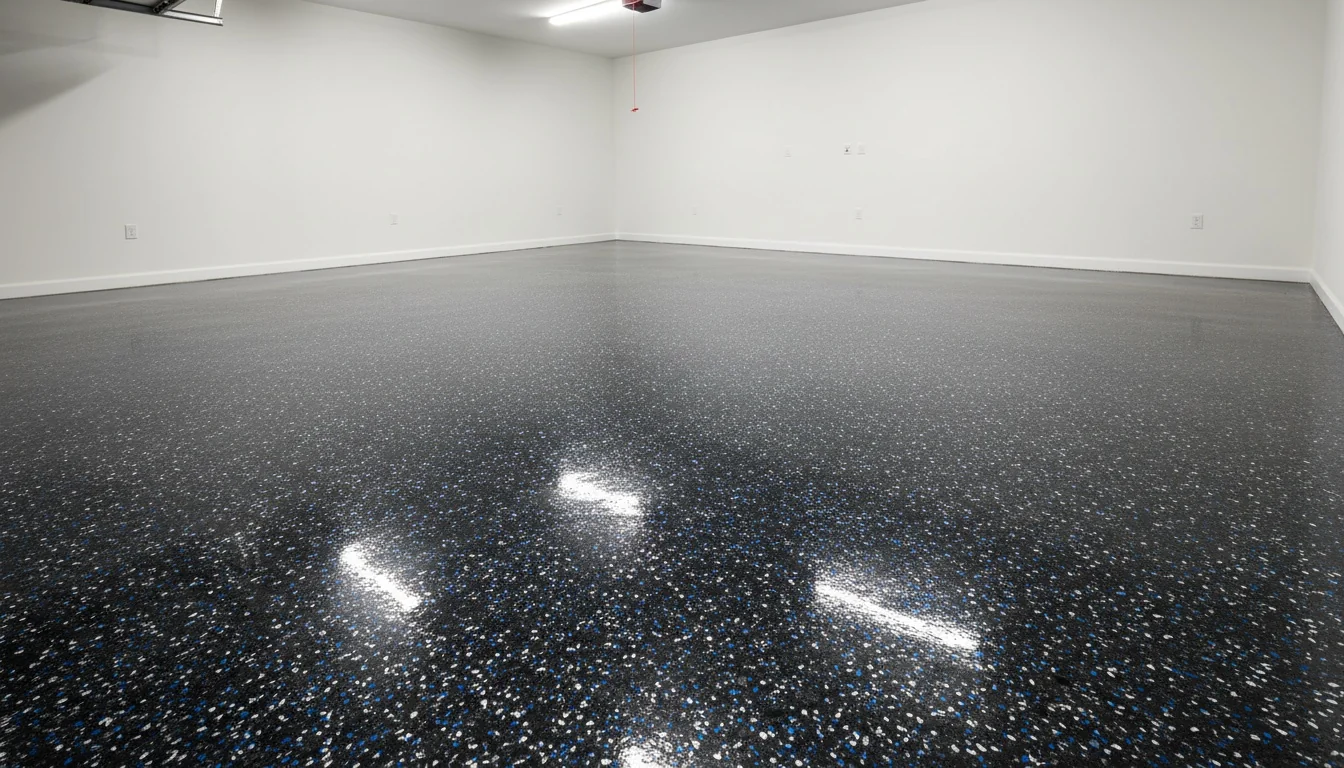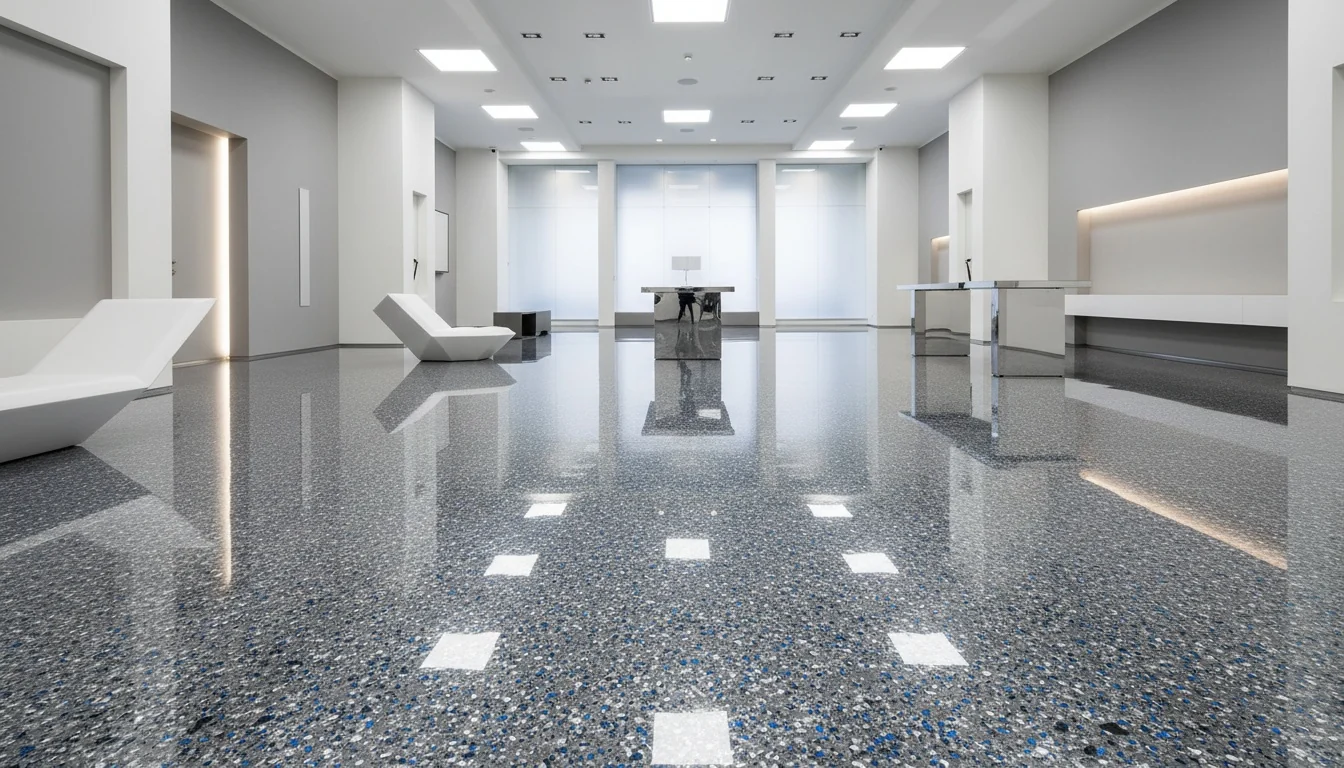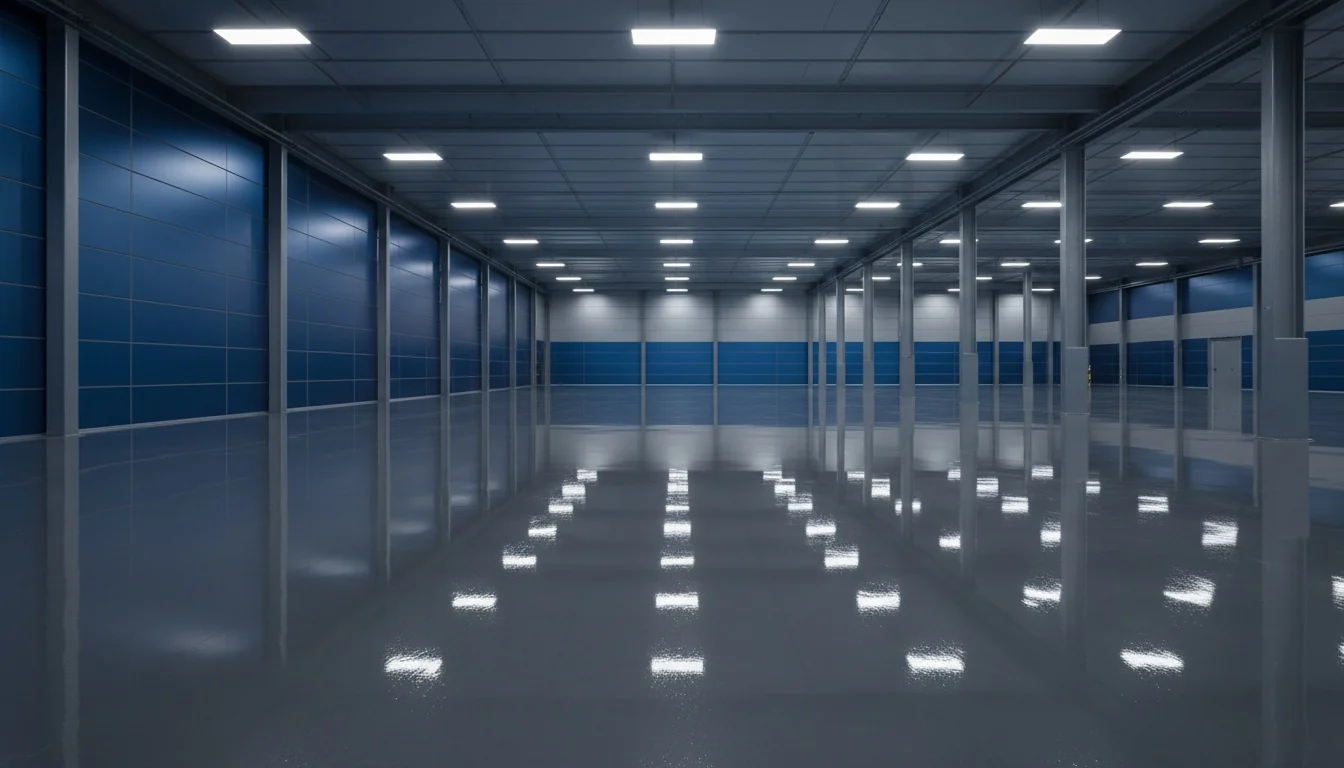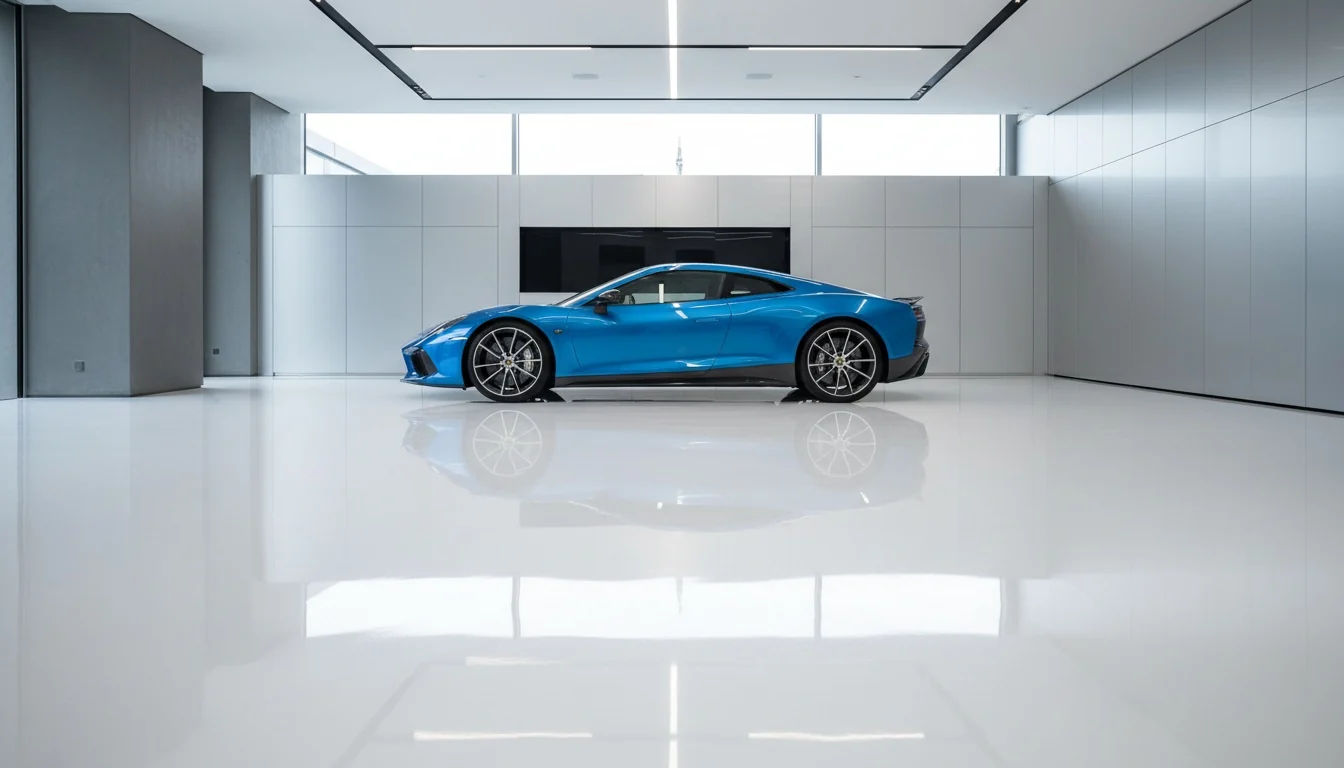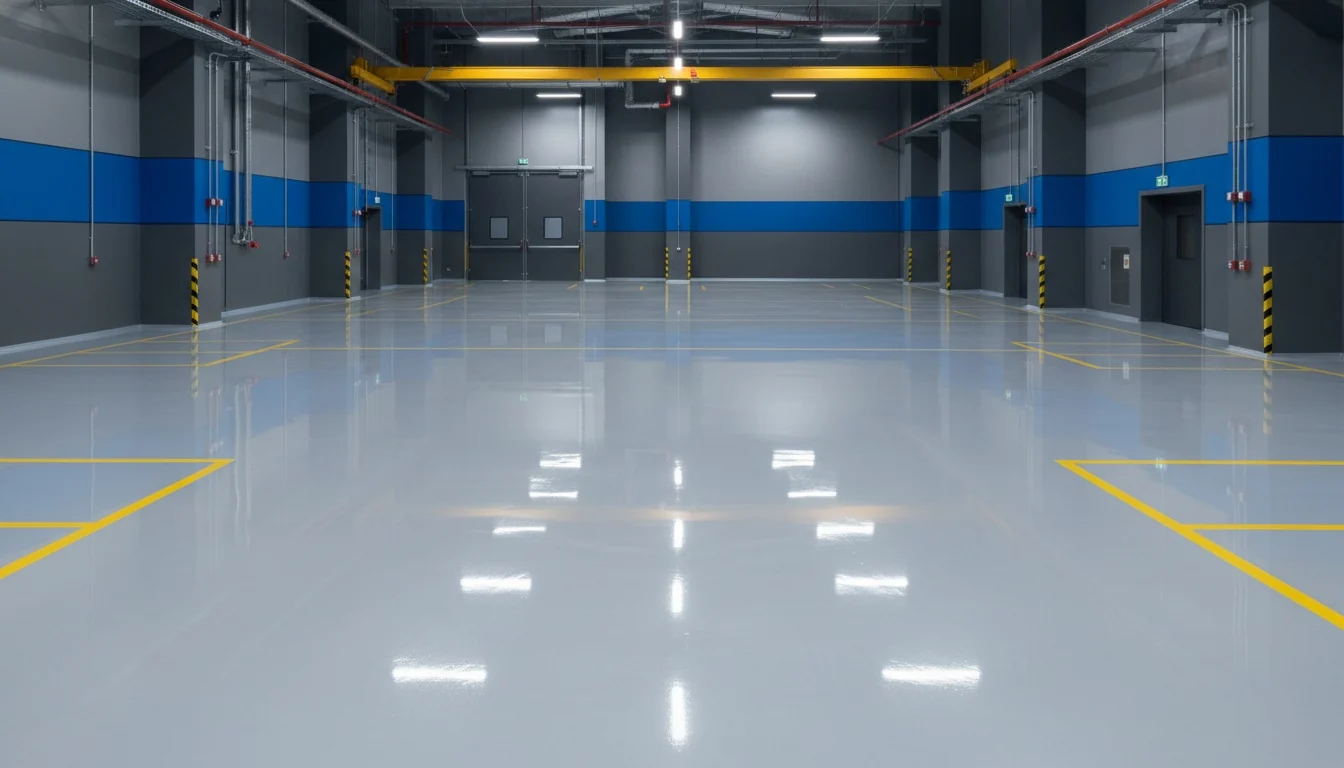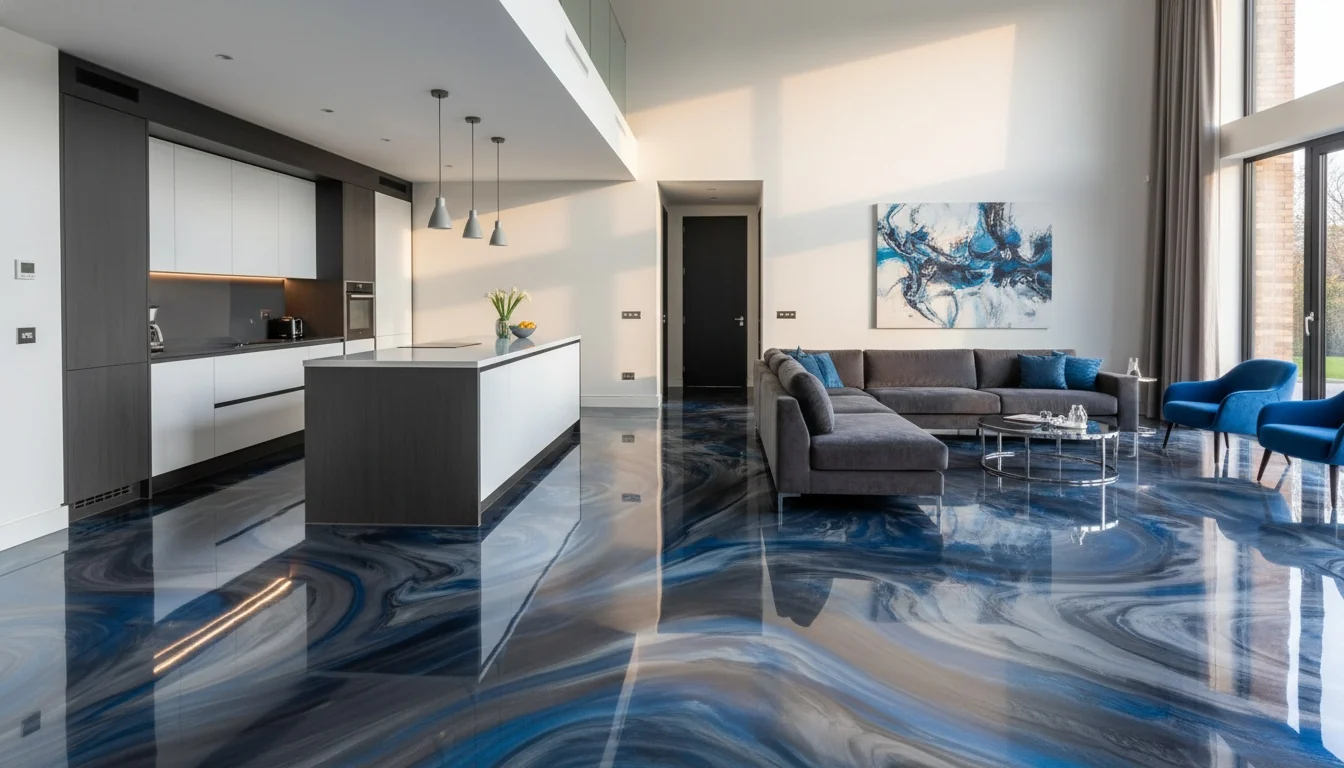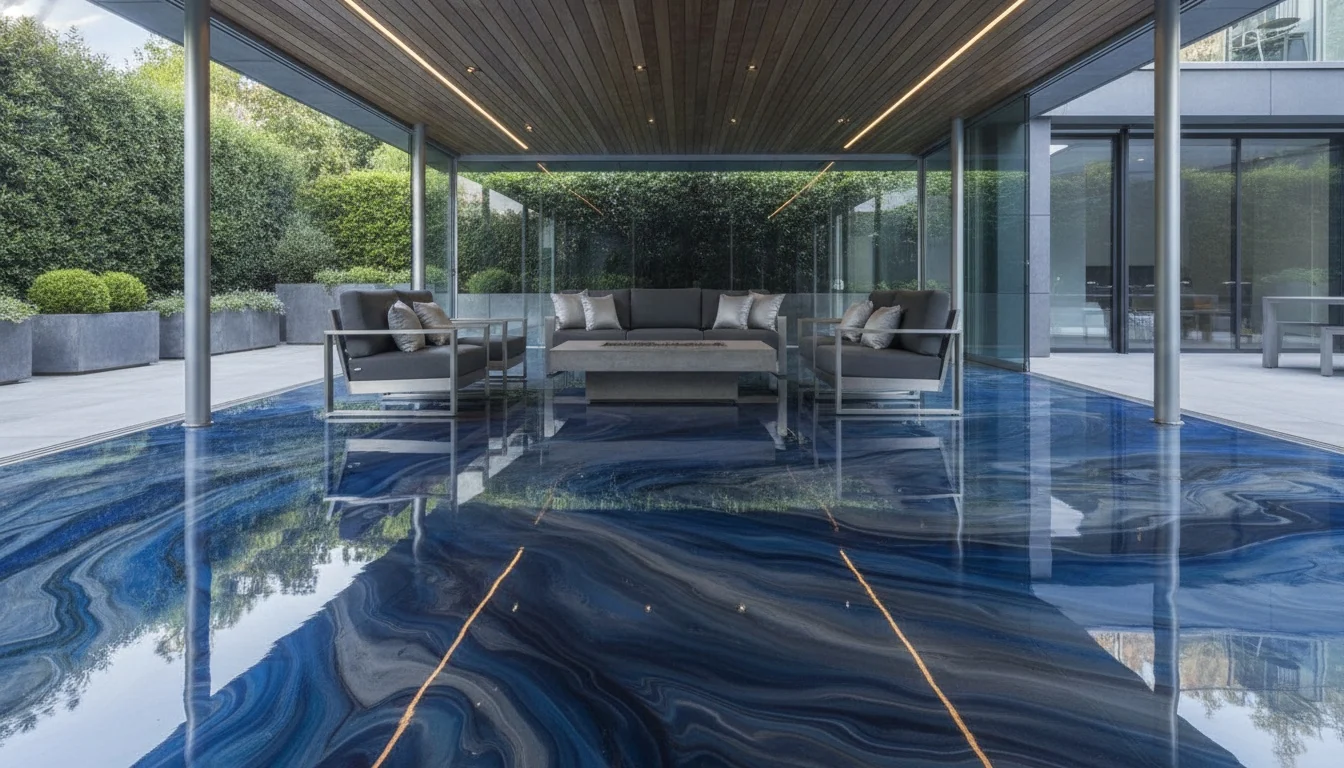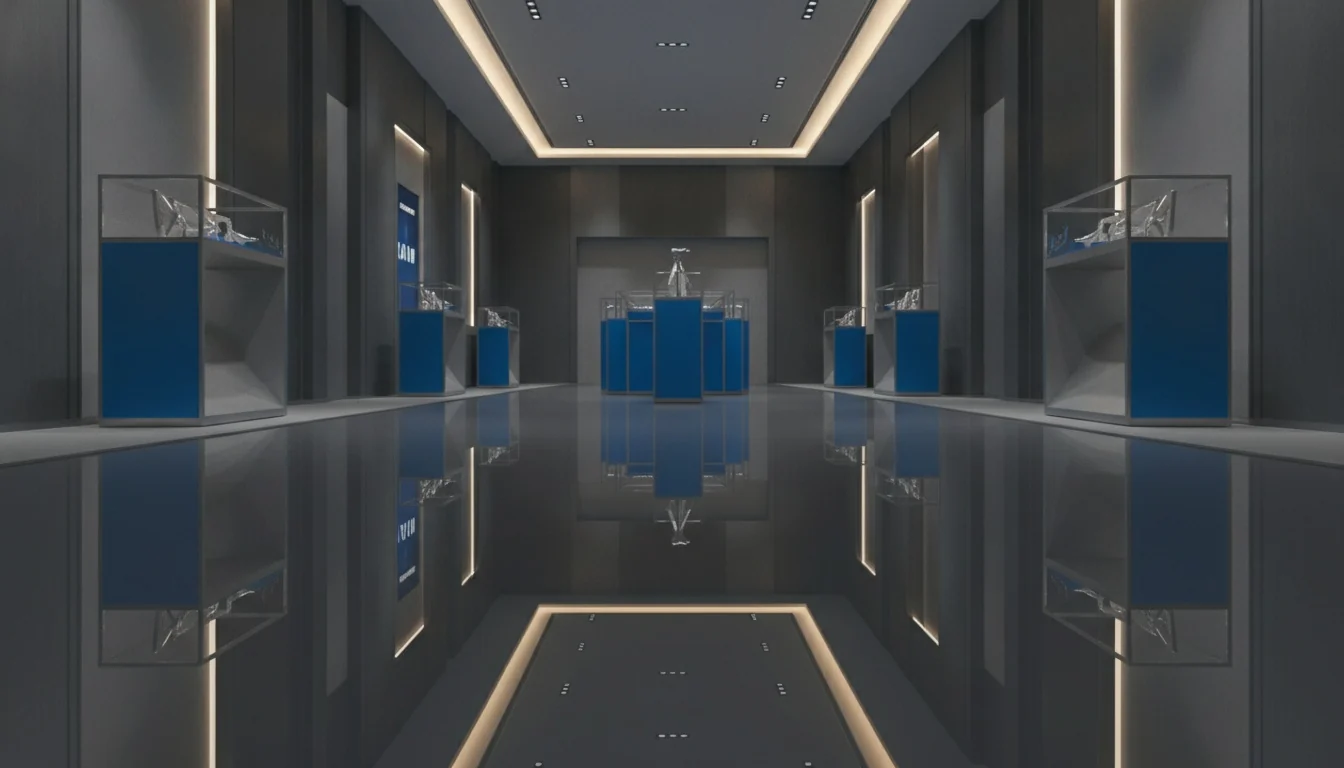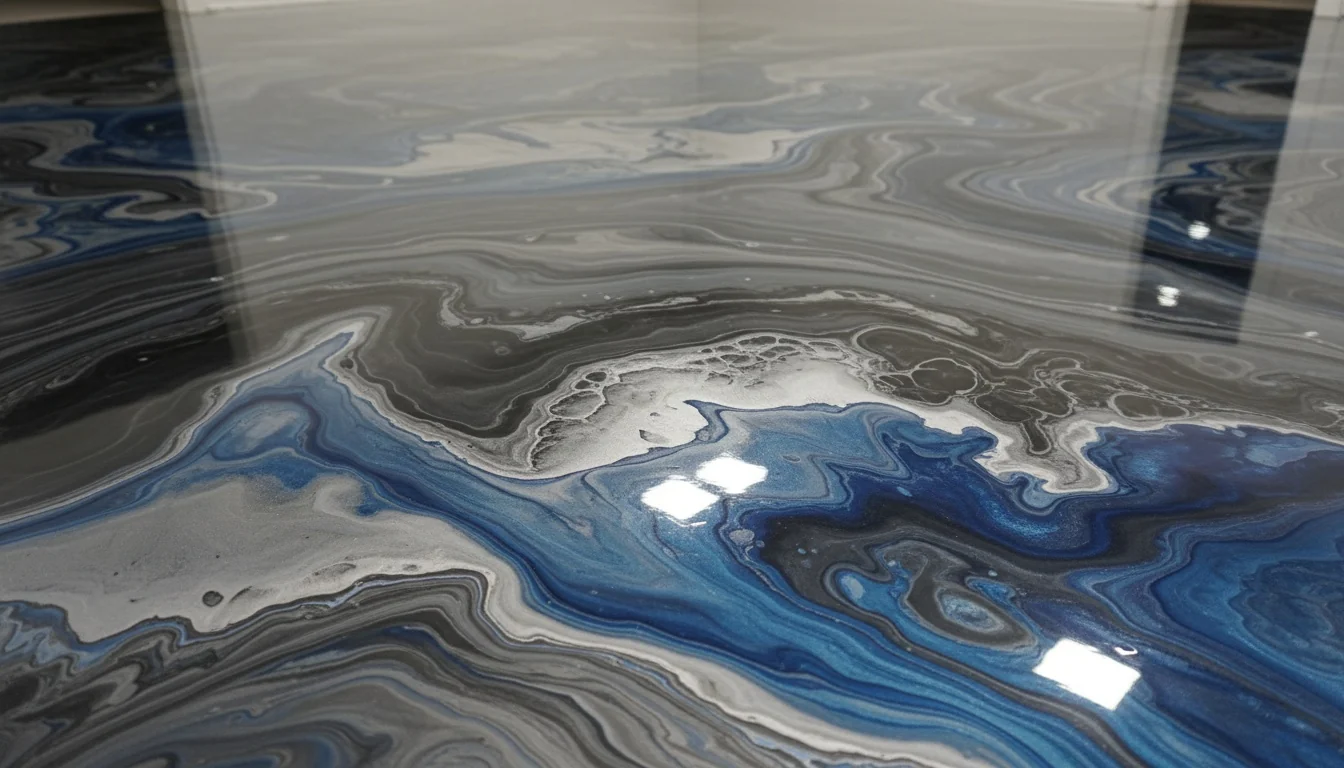

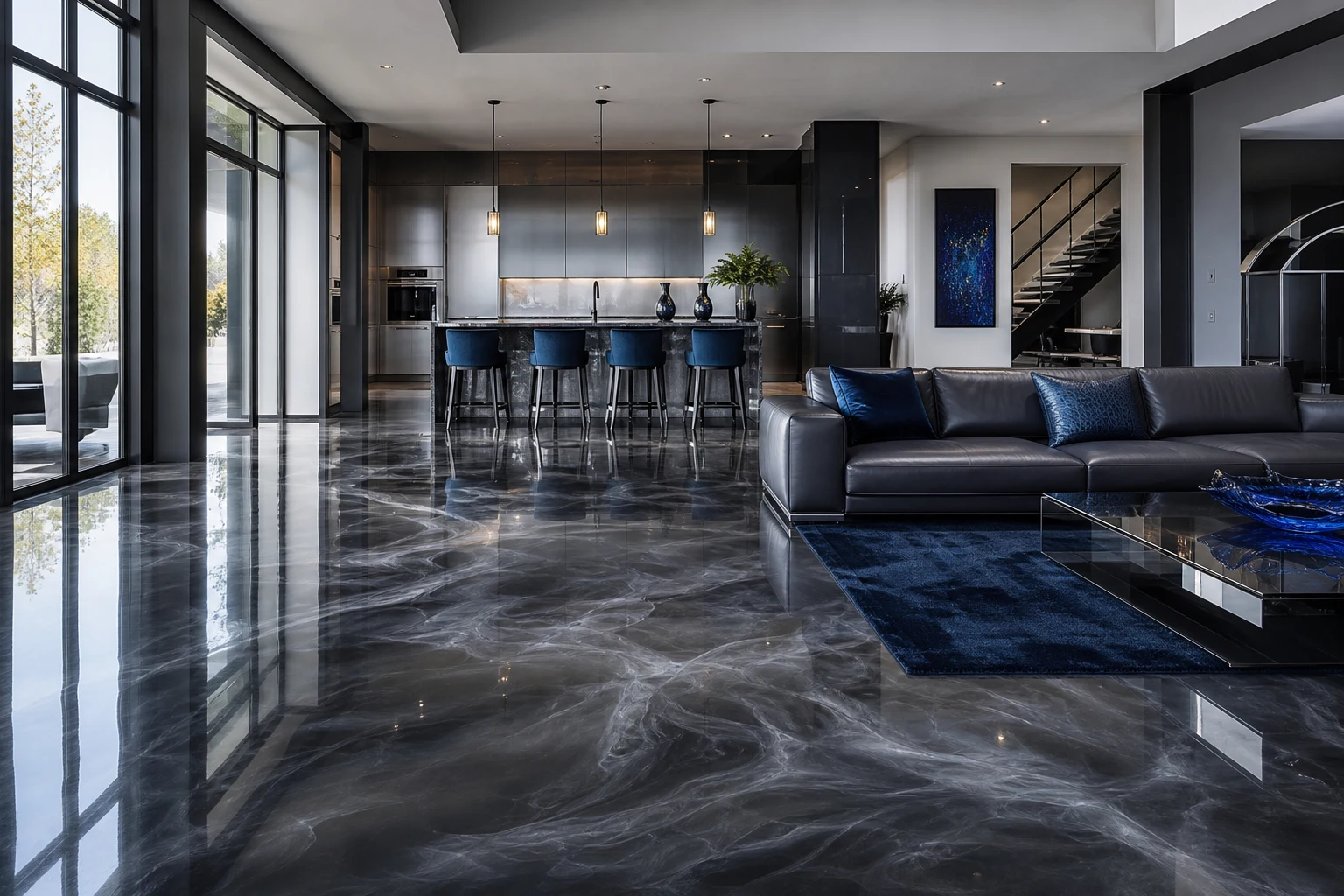
A metallic epoxy floor is the kind of surface that stops people in the doorway. Instead of a flat coat of colour, you get swirls of light, depth and movement underfoot — the look of liquid metal, polished stone or rippling water. It has become the showpiece finish for upmarket Cape Town homes, boutiques and showrooms, and it is the option most people ask about once they have seen one in person.
This guide explains what metallic epoxy flooring actually is, how the marbled effect is made, what it costs, where it works best, and the honest pros and cons — so you can decide whether it is right for your space. When you are ready to have one installed, our metallic epoxy flooring service page covers the install side and how to book a free on-site quote.
Key takeaways
- Metallic epoxy floor = metallic pigments dispersed in clear epoxy, manipulated while wet, then sealed under clear topcoats for a marbled, glossy finish.
- Every floor is one of a kind — the pattern forms organically as the resin cures.
- Metallic sits at the upper end of the epoxy price range — the hand-work and extra clear coats are what you are paying for.
- Best for dry interior feature spaces — living areas, entrances, showrooms and retail.
- It needs skilled application and can be slippery when wet, so it is not the cheapest or the most practical choice for every room.
What is metallic epoxy flooring?
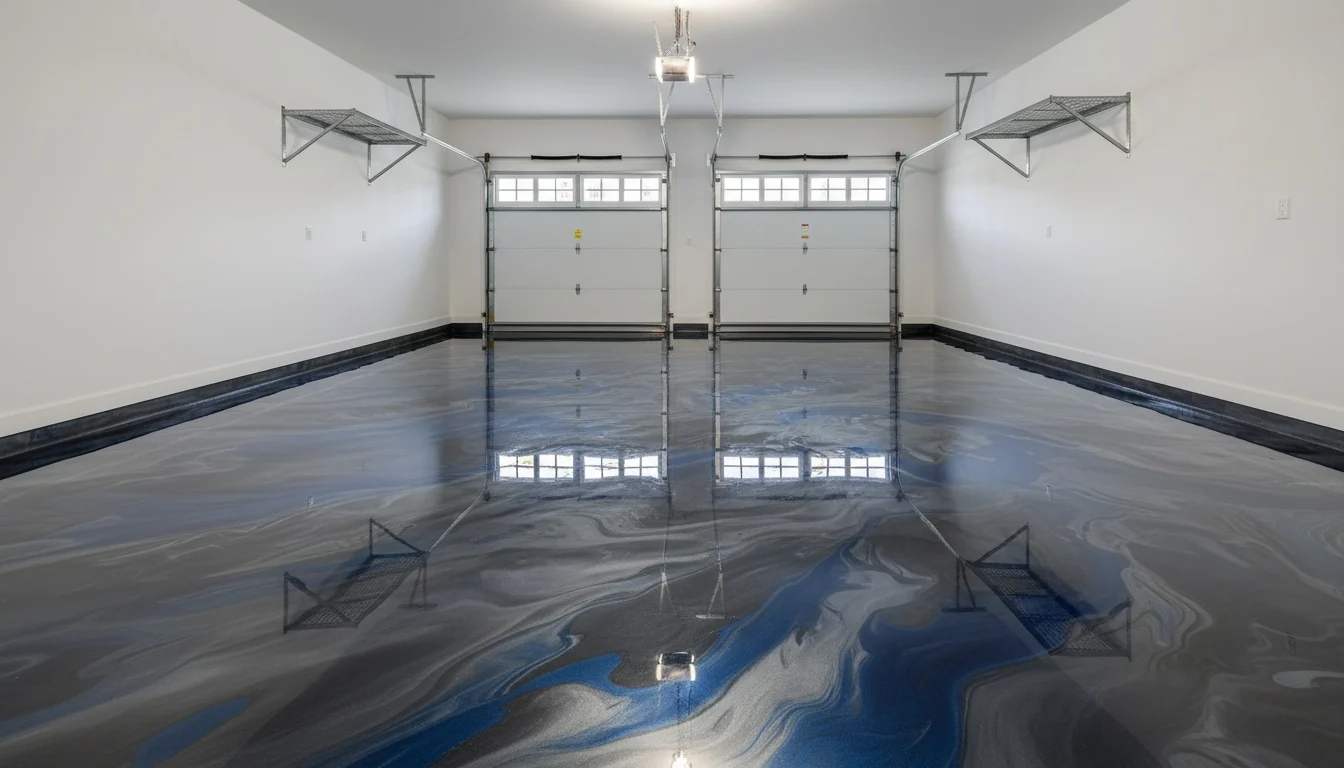
Metallic epoxy flooring is a decorative resin floor system. At its heart is the same two-part epoxy used in any quality coating, but instead of a single opaque colour, fine metallic pigments are suspended in a clear resin. Those pigments catch and bend light, which is what gives the floor its shimmering, three-dimensional character rather than the flat finish of a plain coating.
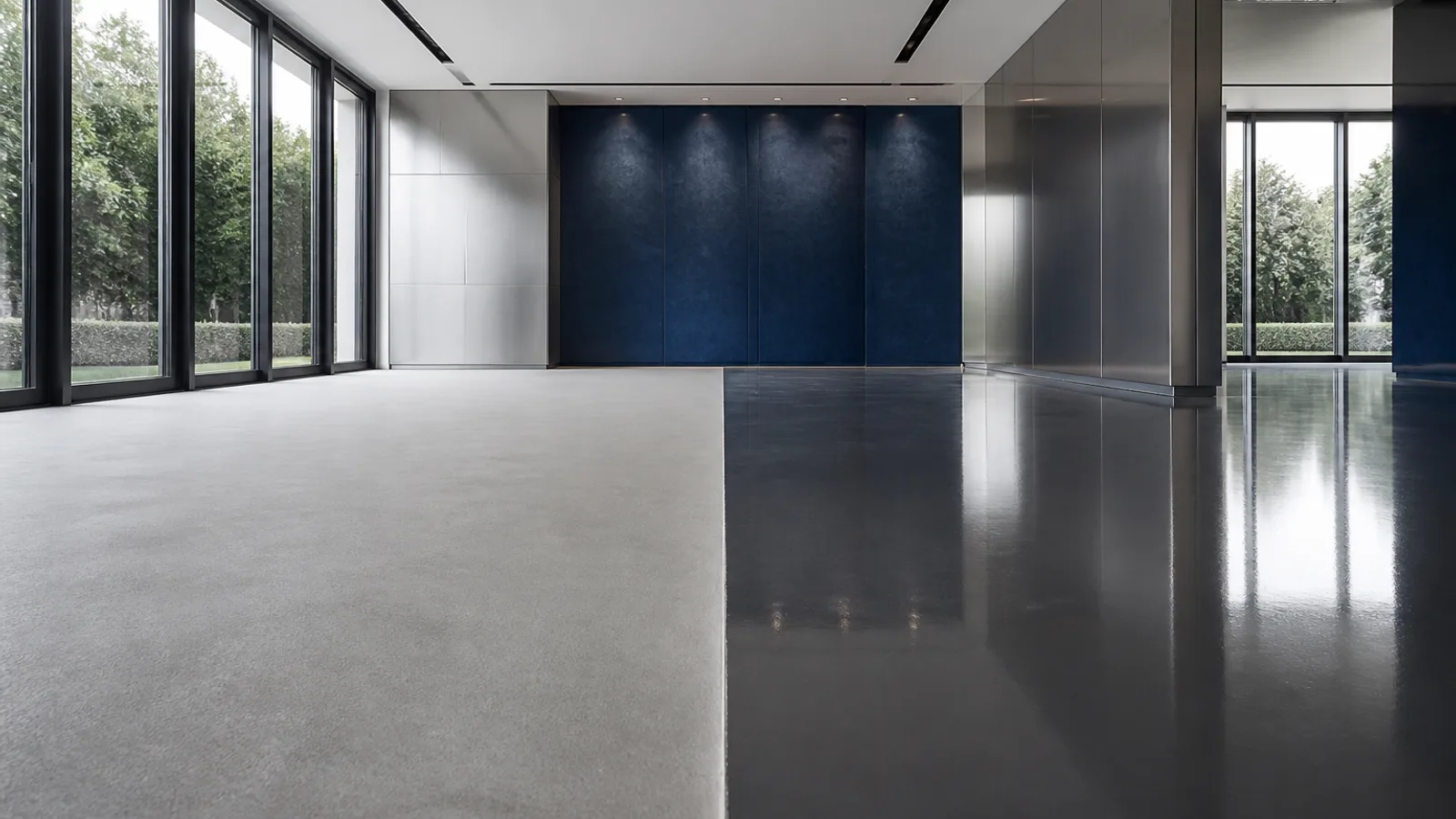
Like all epoxy systems, it is laid over a properly prepared concrete slab and ends up as a seamless, jointless surface — there are no tiles to crack and no grout lines to discolour. The difference with metallic epoxy flooring is entirely in the look: it is built to be admired, not just walked on. If you want a quick sense of the variety, the metallic finish examples show how different palettes change the mood of a room.
How the marbled, poured effect is created
The marbling is not printed or stencilled — it forms while the resin is wet, which is why skilled hands matter. The process runs roughly like this:
- Basecoat. The installer lays a tinted epoxy basecoat over the prepared slab. This acts as the canvas and sets the underlying tone of the floor.
- Pour the metallics. Clear epoxy loaded with one or more metallic pigments is poured on top. While it is still wet, the installer spreads, drags and lenses the colour with rollers, squeegees and a heat torch.
- Manipulate while wet. The torch and air movement push the pigments apart and let them pool, creating the cells, veins and "lava" effect. This is where two installers can take the same colours and produce completely different floors.
- Clear topcoats. Once the design has cured, several clear topcoats are built over it. These add the deep, glass-like gloss and seal the metallic layer against wear and UV dulling.
The whole sequence relies on timing and feel, which is the single biggest reason metallic epoxy costs more and takes longer than a standard coating.
Colours and looks
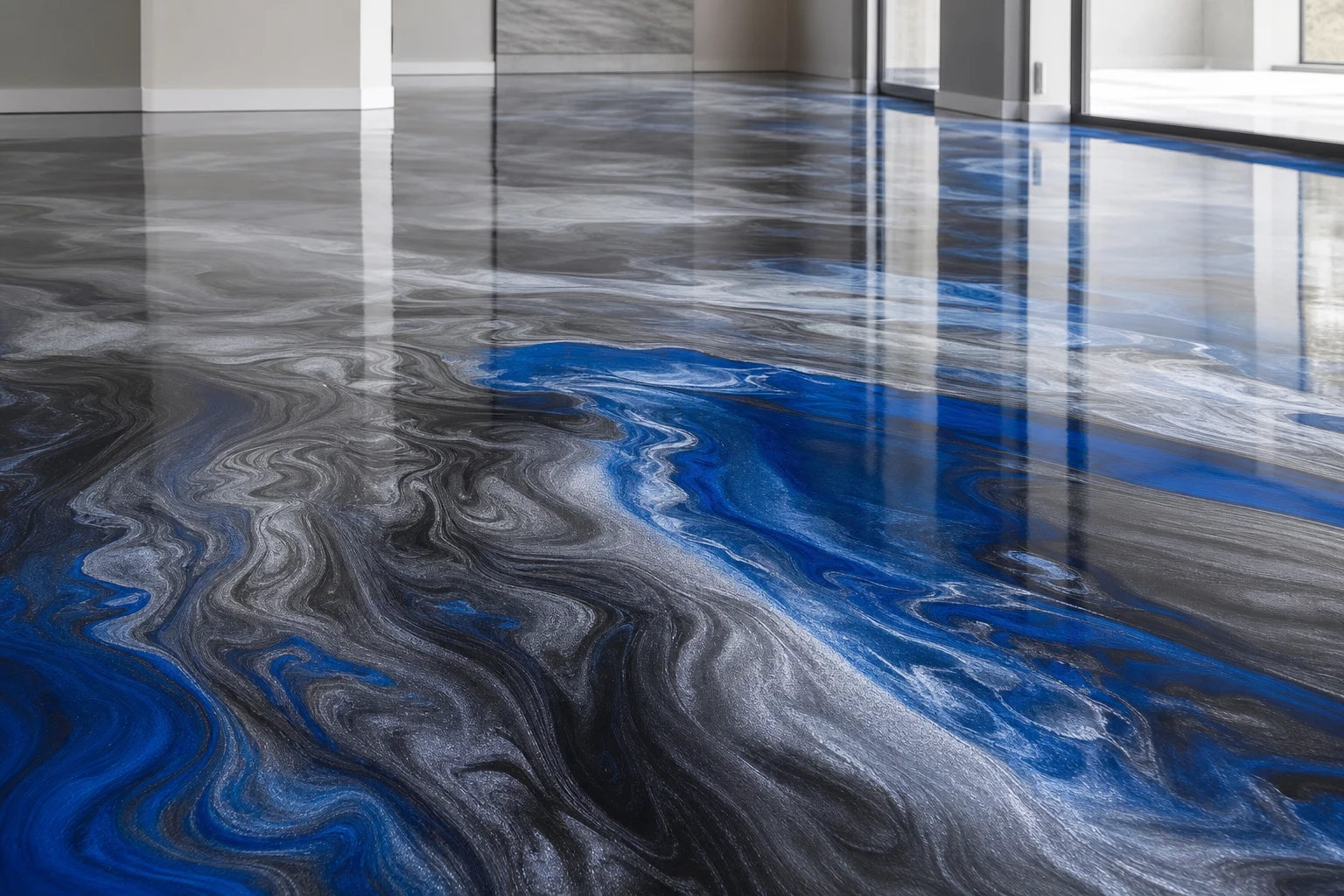
Almost any palette is possible, and the same pigments behave differently depending on how they are worked. A single pigment over a matching base gives a subtle, pearlescent sheen — think soft pewter or champagne — while two or three contrasting pigments produce dramatic, high-contrast feature floors. Popular Cape Town choices include cool charcoals and silvers for modern interiors, warm coppers and bronzes for hospitality spaces, and blue-greens that read like the ocean.
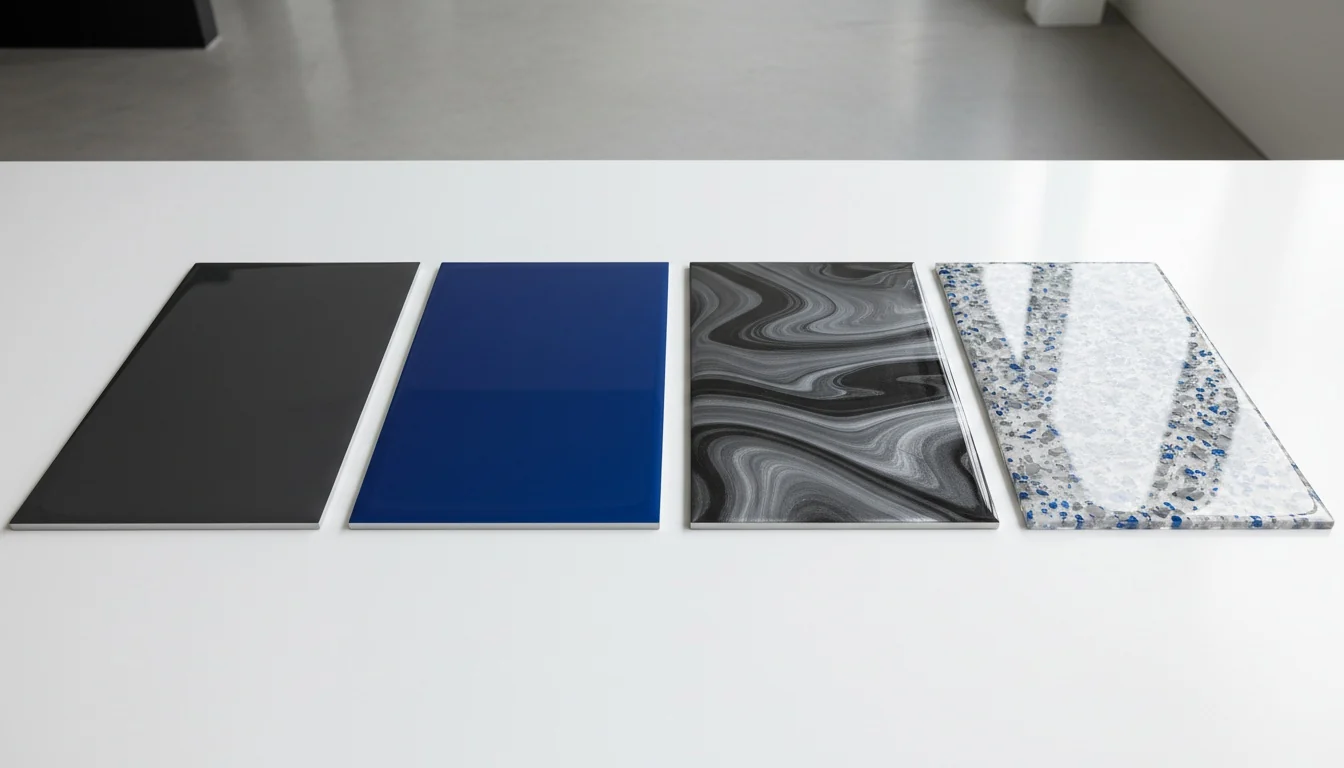
Because the look is hard to picture from a swatch, a good installer will bring sample boards and agree the palette and intensity with you before any resin goes down.
Where metallic epoxy suits best
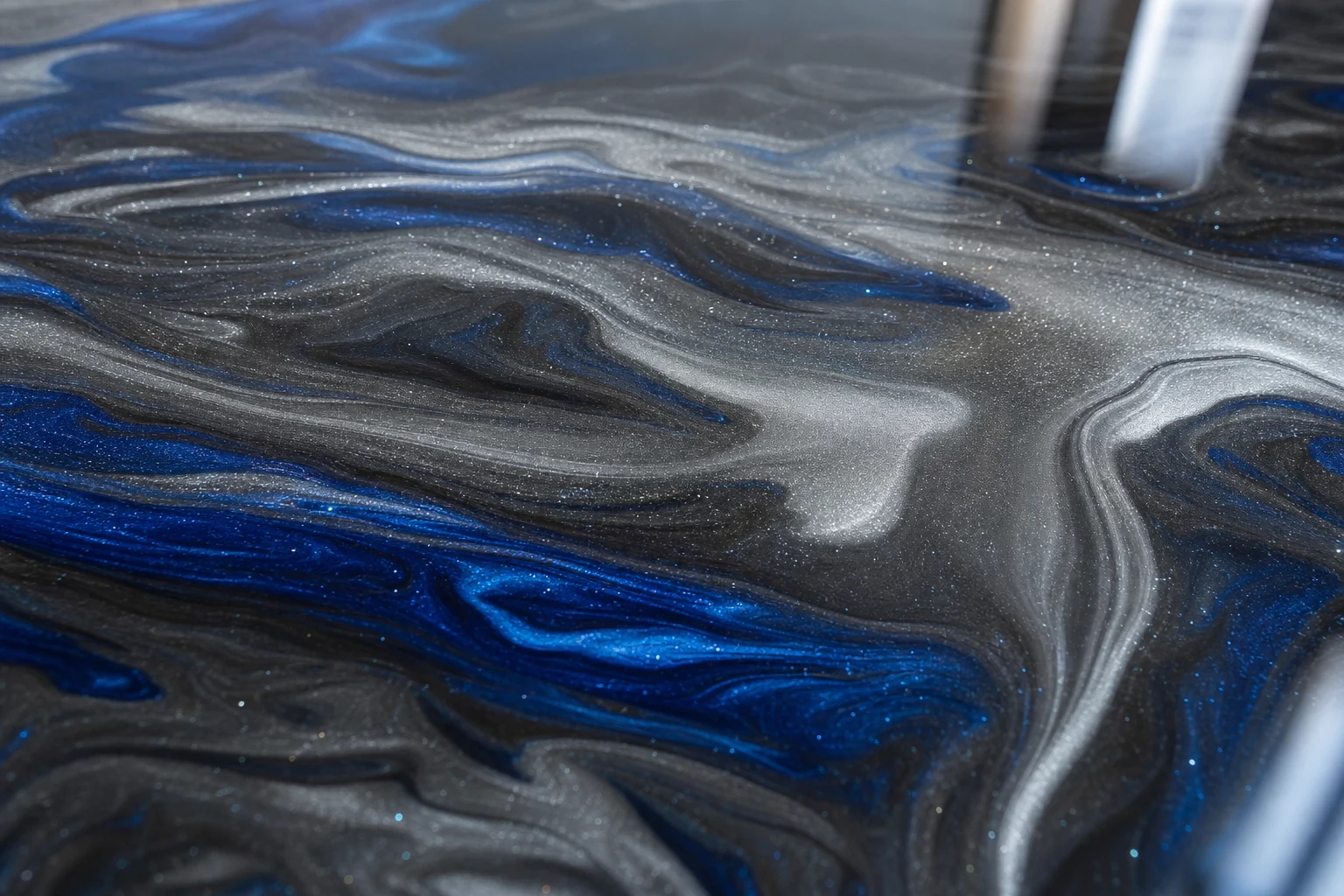
Metallic epoxy flooring earns its keep where the floor is part of the design statement and the area stays dry. It works beautifully in:
- Open-plan living areas and entrance halls in homes
- Showrooms, boutiques and retail floors where presentation sells
- Salons, restaurants, offices and reception areas
- Feature garages where the owner wants something special, not just functional
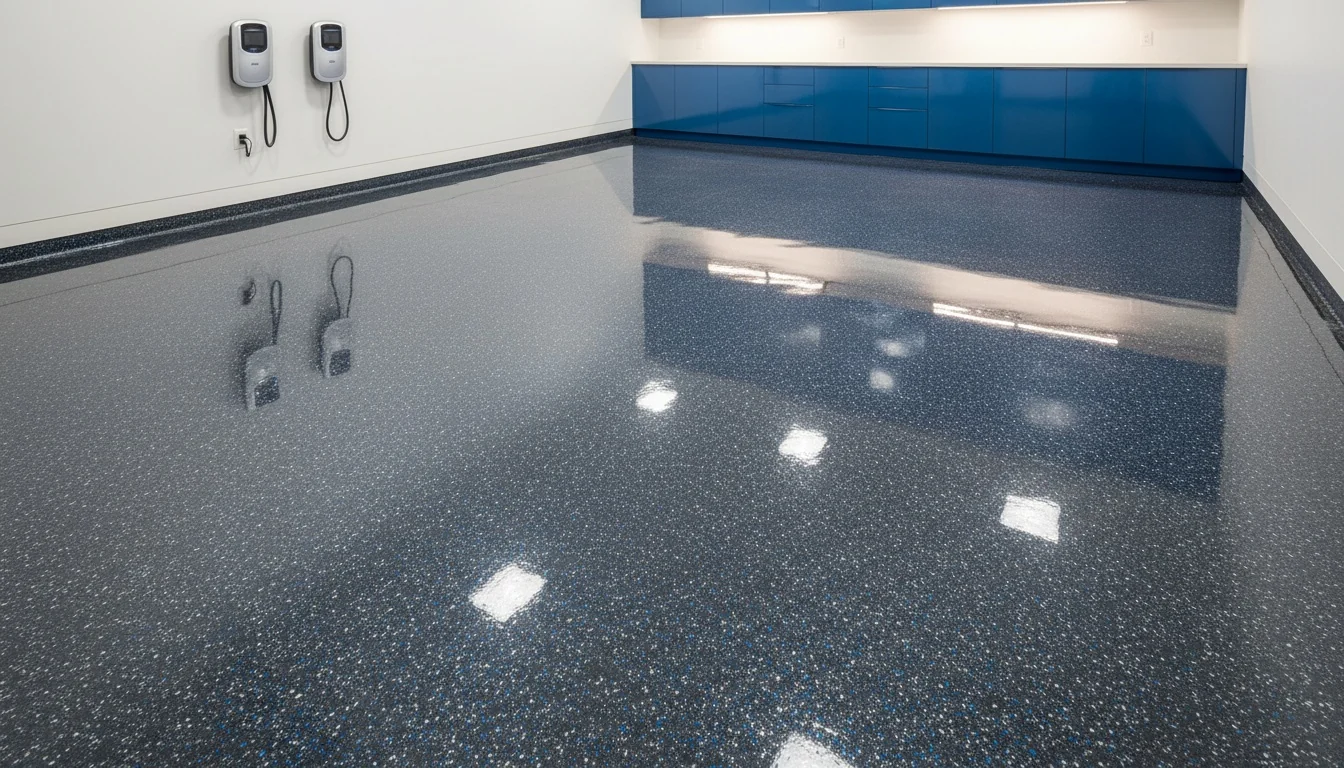
Because it is a high-gloss surface, it is less suited to genuinely wet or high-grip areas like commercial kitchens or pool surrounds, where a textured flake or anti-slip system makes more sense.
Pros and cons
Metallic epoxy is stunning, but it is not the right answer for every room. Weighing it up honestly:
The upsides
- Genuinely unique. No two floors are alike, and the three-dimensional depth is something tile or paint simply cannot copy.
- Seamless and easy to clean. No joints or grout lines — a soft mop keeps it gleaming.
- Durable. The clear topcoats make a hard, sealed surface that resists abrasion and stains. For more on lifespan, see how durable epoxy floors are.
The trade-offs
- Needs skilled application. The finish lives or dies on the installer's experience — a DIY or rushed job tends to look muddy rather than marbled.
- Can be slippery. The high-gloss surface is best kept to dry interior spaces unless an anti-slip aggregate is added.
- Cost. It is the priciest mainstream epoxy finish, so the budget has to allow for the look.
What moves the price
Metallic is the most expensive of the epoxy finishes, and it is worth understanding why rather than fixating on a rate. The pigment costs more, but the real driver is hand-work: the effect is created by a skilled applicator moving the resin, and a multi-pigment, high-contrast feature floor takes considerably longer to lay than a subtle single-pigment one.
After the design, the variables are the usual ones — floor area, the condition of the slab and how much surface preparation it needs, and access. Current ranges for every system sit in one place on our epoxy flooring price guide, and the only way to get a real number for your room is a free on-site measure.
So, is metallic epoxy worth it?
If the look matters to you and the room is dry, a metallic epoxy floor is usually worth the premium — it turns an ordinary surface into a feature and lasts for years with very little upkeep. If you mainly need a tough, practical floor for a workshop or busy garage, a solid-colour or flake system will give you better value for money. It comes down to whether you are buying a design statement or a hard-wearing surface.
Either way, it pays to understand the full menu before you decide. Our epoxy flooring services pages walk through how metallic compares to flake, solid-colour and industrial finishes, so you can match the right system to the right room. And when you have settled on metallic, an experienced Cape Town installer can bring sample boards, talk through palettes and price up your space at no cost.