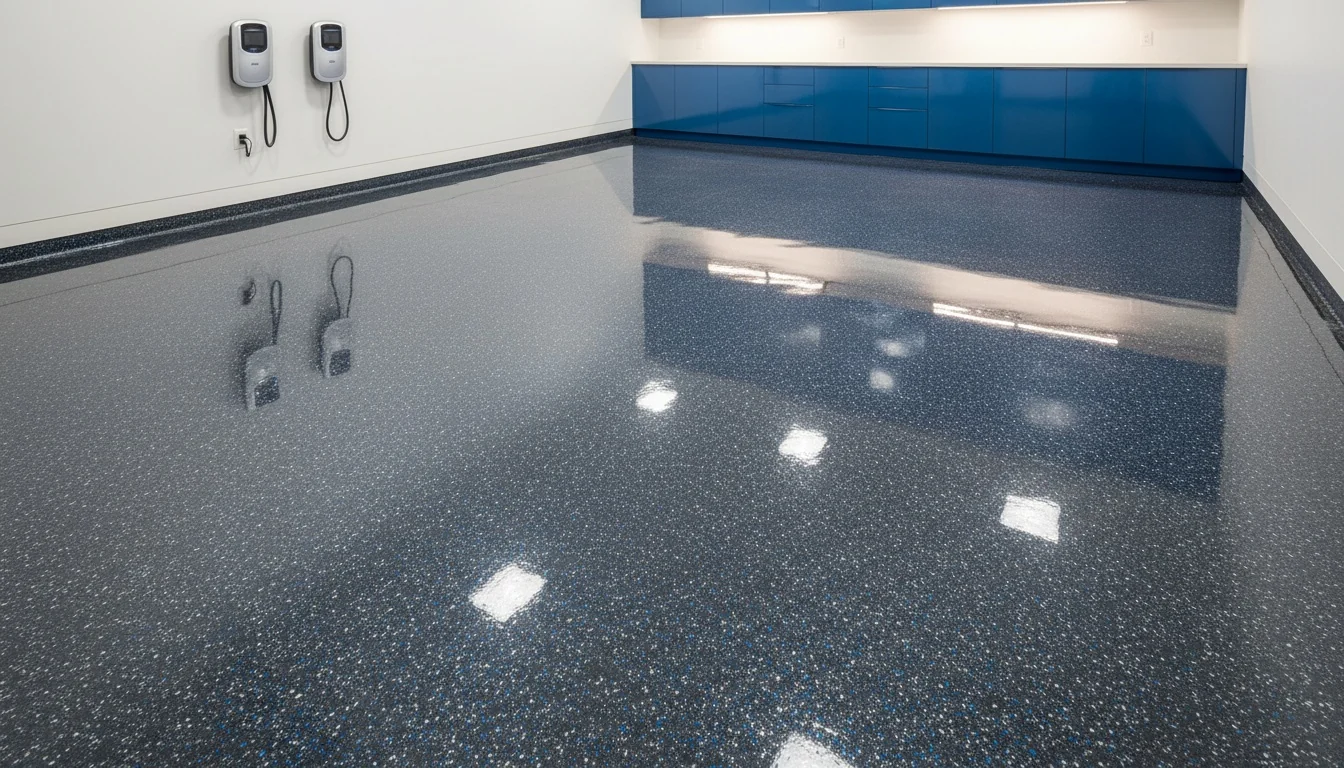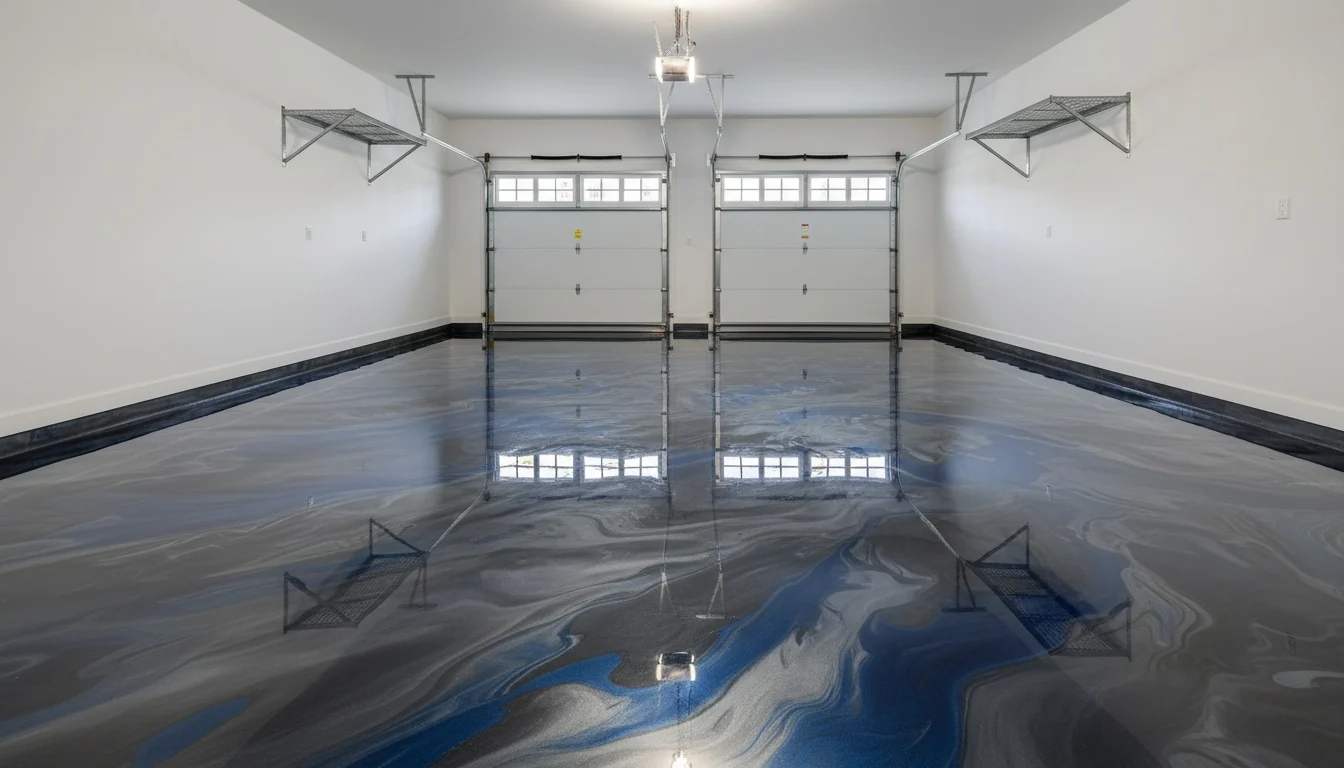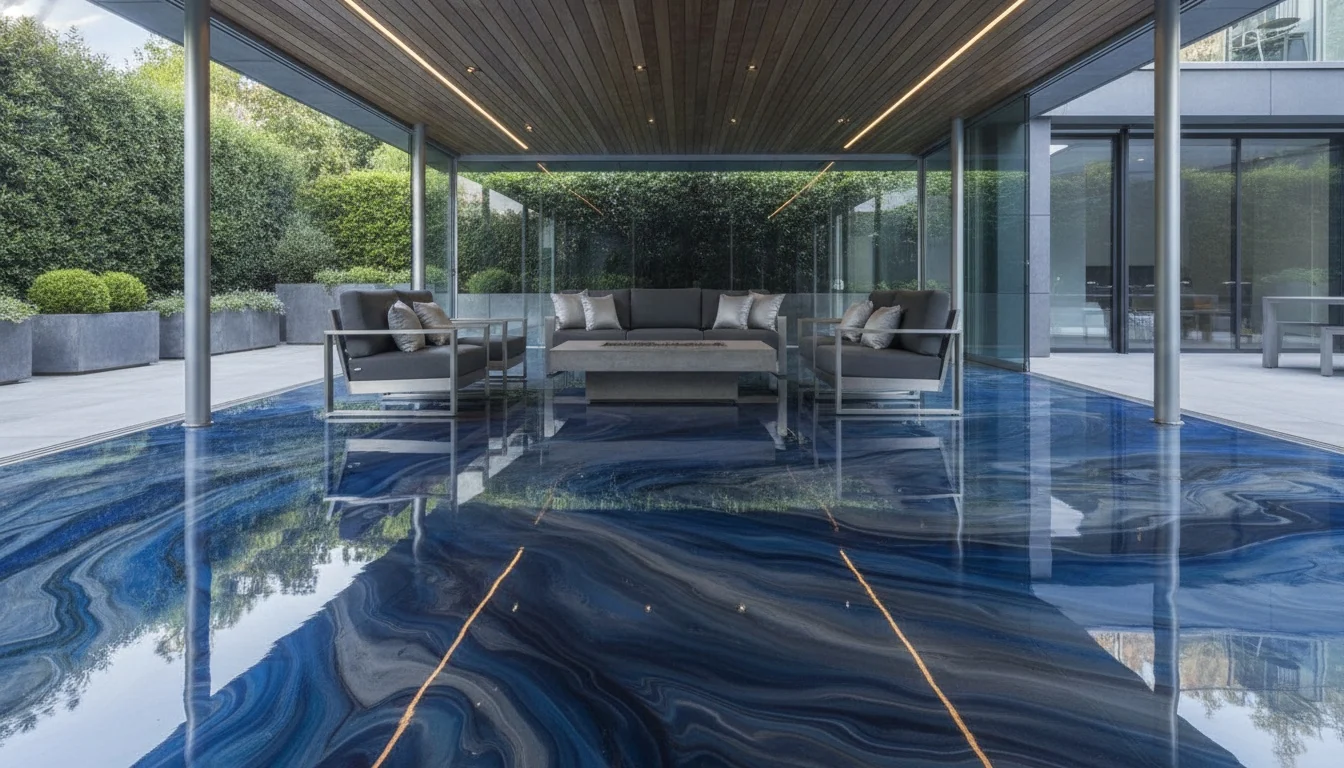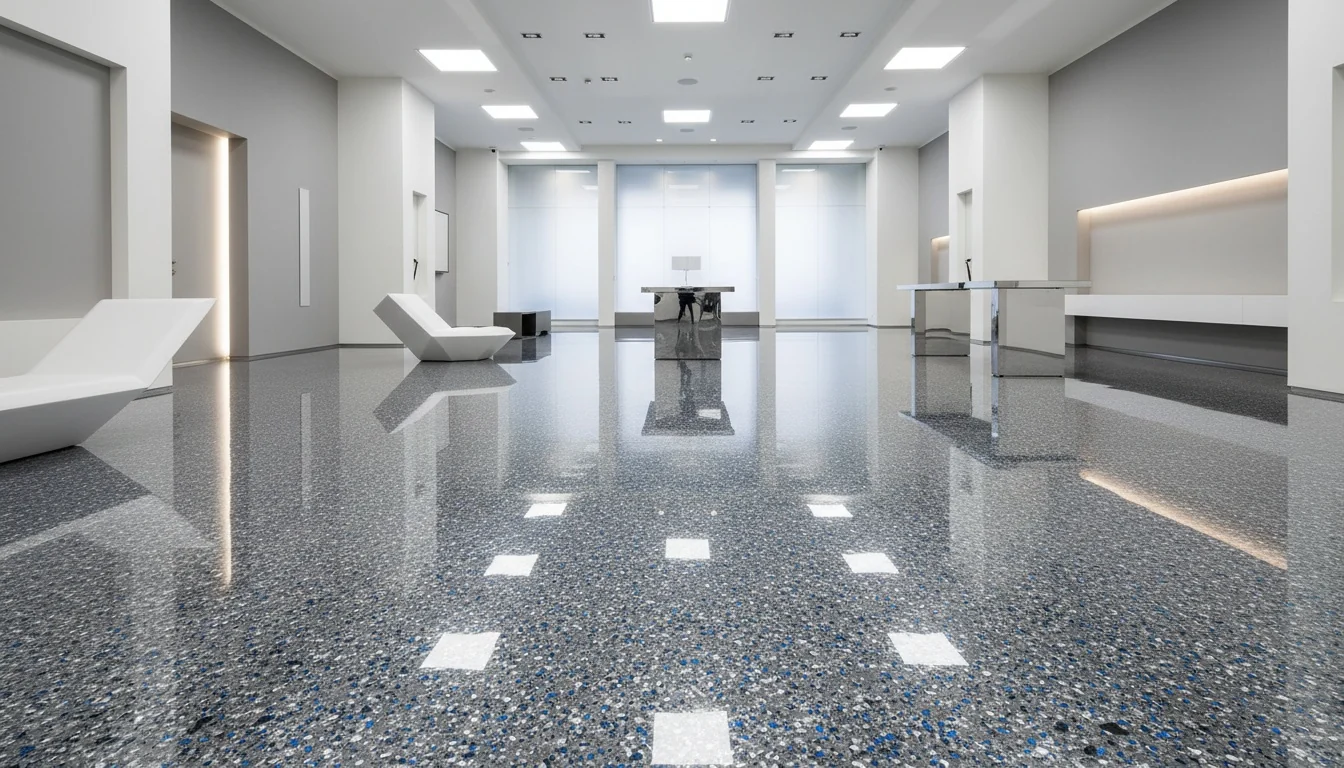

Is epoxy flooring slippery? It is one of the most common hesitations we hear from Cape Town property owners, and it usually comes from the same place: you have seen a mirror-gloss epoxy floor in a showroom or a garage, it looked spectacular, and you immediately pictured someone walking onto it with wet feet. It is a fair worry, and it deserves a straight answer rather than reassurance.
The short version is this. A clean, dry epoxy floor is not slippery — it grips much like any other sealed hard surface. Epoxy becomes slippery when something gets between your shoe and the coating: water, oil, soap or a fine layer of dust. What matters, then, is not "epoxy" as a material but the finish that gets specified for your room. Below we look at when epoxy actually becomes a slip risk, how slip resistance is properly measured, and the anti-slip options a good installer will put on the table before a single litre of resin is mixed.
Key takeaways
- Dry epoxy is not slippery. The risk appears when water, oil, soap or dust forms a film on a smooth, high-gloss surface.
- Slip resistance is a specification, not a property — anti-slip aggregate in the topcoat is what makes a floor safe underfoot when wet.
- Two different measures exist: the German ramp test (R9–R13) and the pendulum test (PTV). They are not interchangeable, and you cannot convert one to the other.
- The aggregate choice is a trade-off between grip, comfort underfoot and ease of cleaning — coarse grit grips hardest but is harsh on bare feet and holds dirt.
- South Africa's building regulations require wet-room floors to be water-resistant, but set no slip-resistance number — so the spec is down to you and your installer.
So, is epoxy flooring slippery? The honest answer
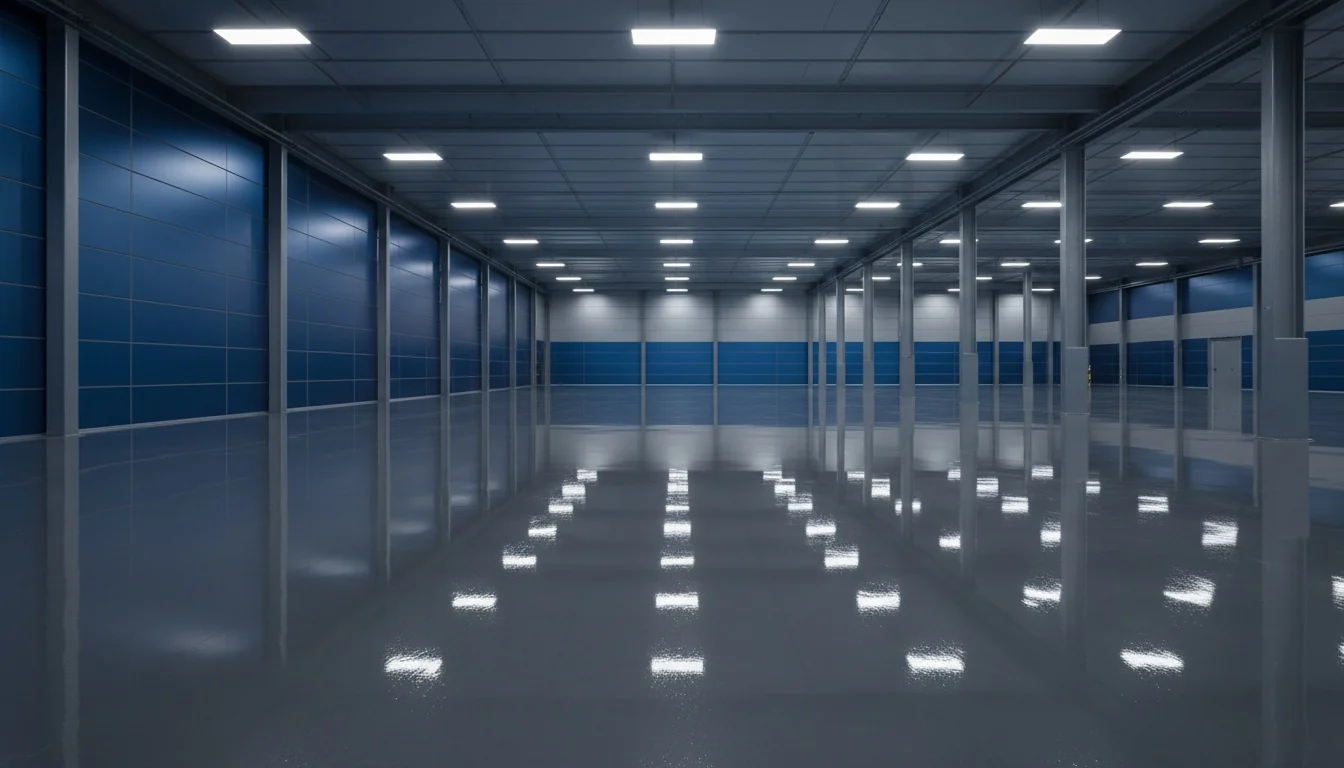
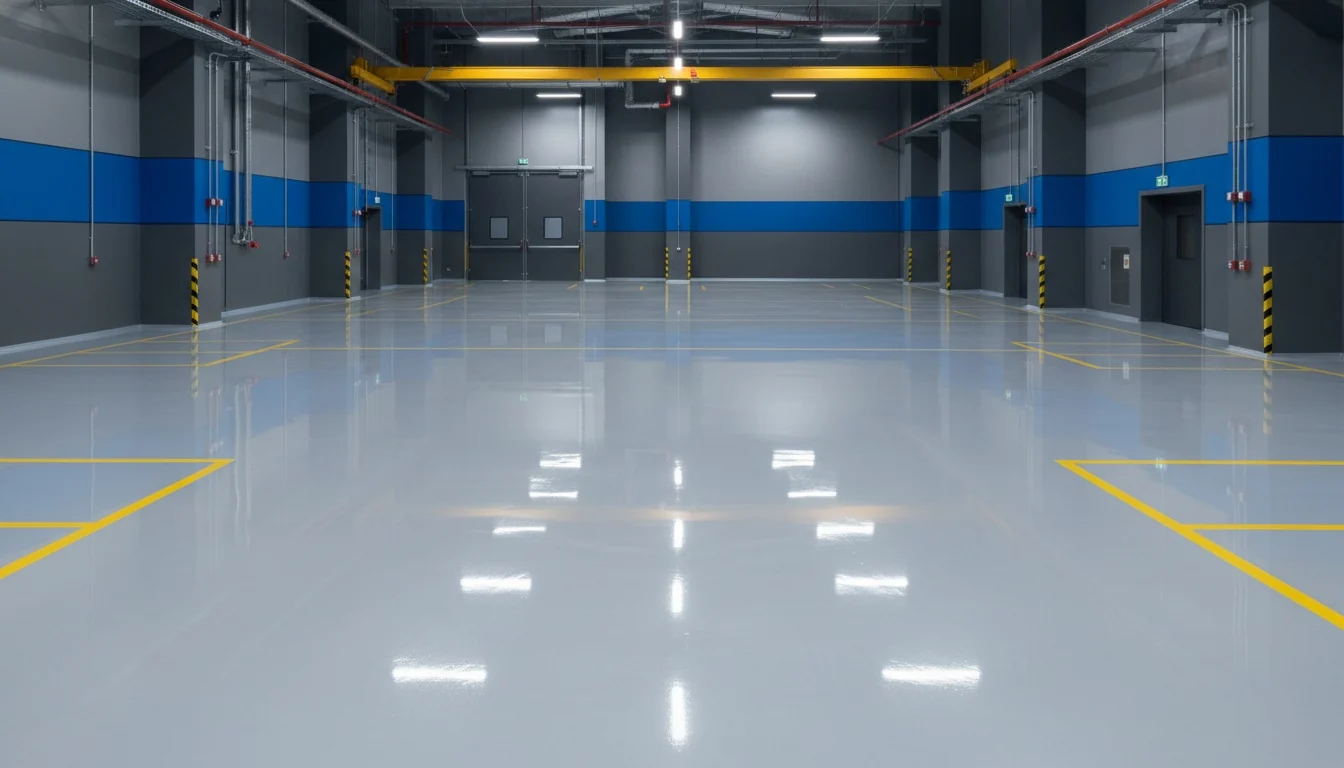
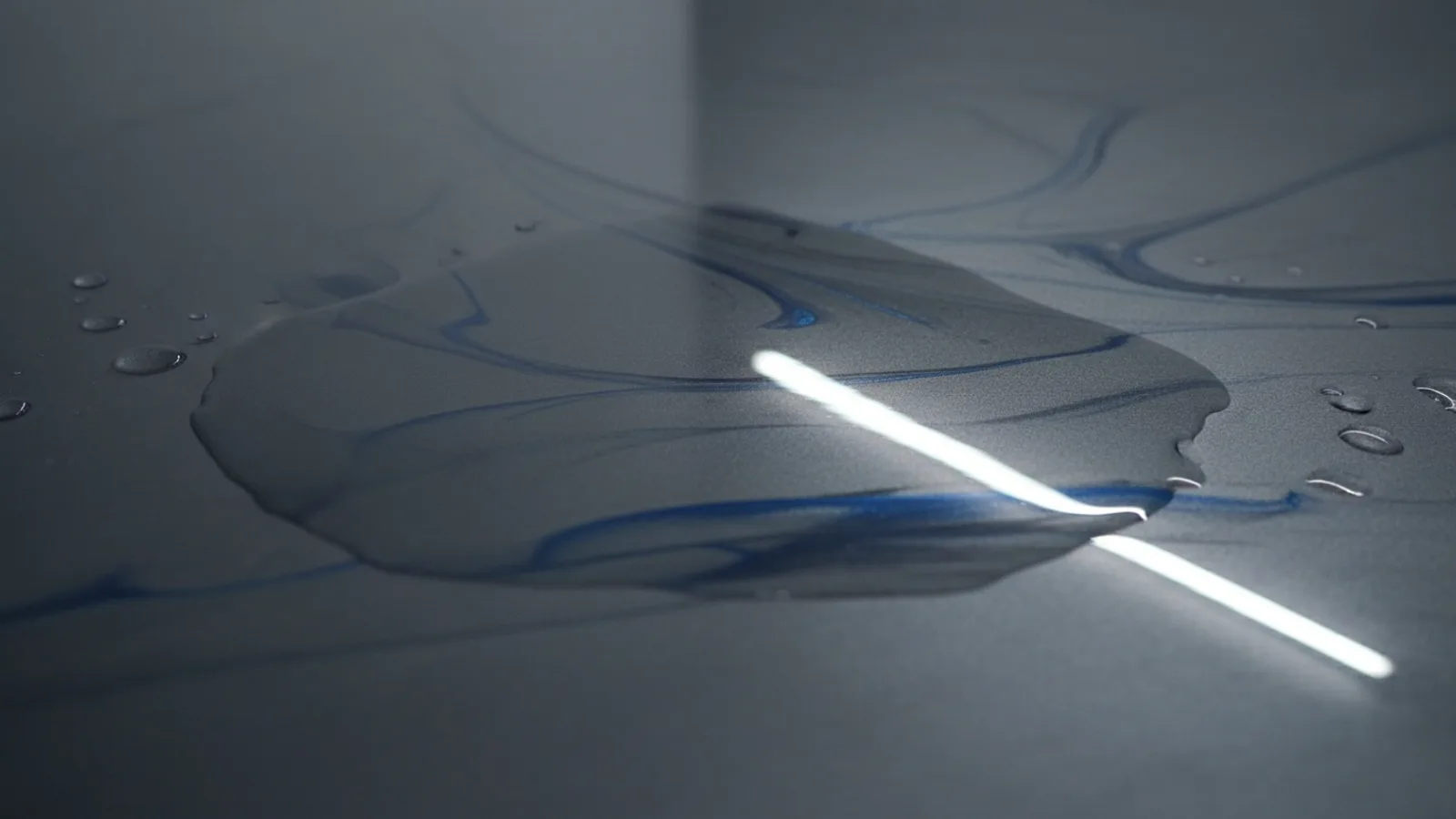
Cured epoxy is a hard, dense, seamless film. Walk on it dry, in ordinary shoes, and there is nothing treacherous about it. The coefficient of friction is perfectly ordinary. The problem is that a high-gloss epoxy floor is also very smooth and completely non-porous. There is no texture to break up a liquid film and nowhere for that liquid to go. So when water hits it, the water stays on the surface in a thin, even layer, and your shoe rides on that layer instead of on the floor.
That is why the same floor can feel grippy on a dry summer afternoon and treacherous on a wet Cape winter morning. The usual real-world culprits are predictable:
- Rain walked in from outside — the classic one at a garage door or a shop entrance during a Cape Town winter.
- Wash-down water in kitchens, laundries, wash bays and food-prep areas.
- Oil, grease and coolant in workshops and mechanical bays, which are far more slippery than water.
- Fine dust on a gloss floor, which behaves like tiny ball bearings underfoot — often overlooked in dry warehouses.
- Soapy residue from over-strength cleaning products that are not rinsed off properly.
None of these are arguments against epoxy. They are arguments against putting a smooth gloss finish in a room that gets wet. That is a specification decision, and an entirely avoidable one.
How slip resistance is actually measured
Once you start asking installers for a "non-slip" floor, you will hear two different vocabularies, and it helps to know which is which. Neither is marketing fluff. They are both real test methods, but they measure different things in different ways.
The ramp test: R9 to R13
This is the one most people have heard of. Under the German ramp test method, a sample of the floor is laid on an adjustable ramp and coated with motor oil. A tester wearing standard cleated safety boots walks up and down while the ramp is slowly raised, and the angle at which they lose their footing determines the rating — from R9 at the shallow end to R13 at the steep end.
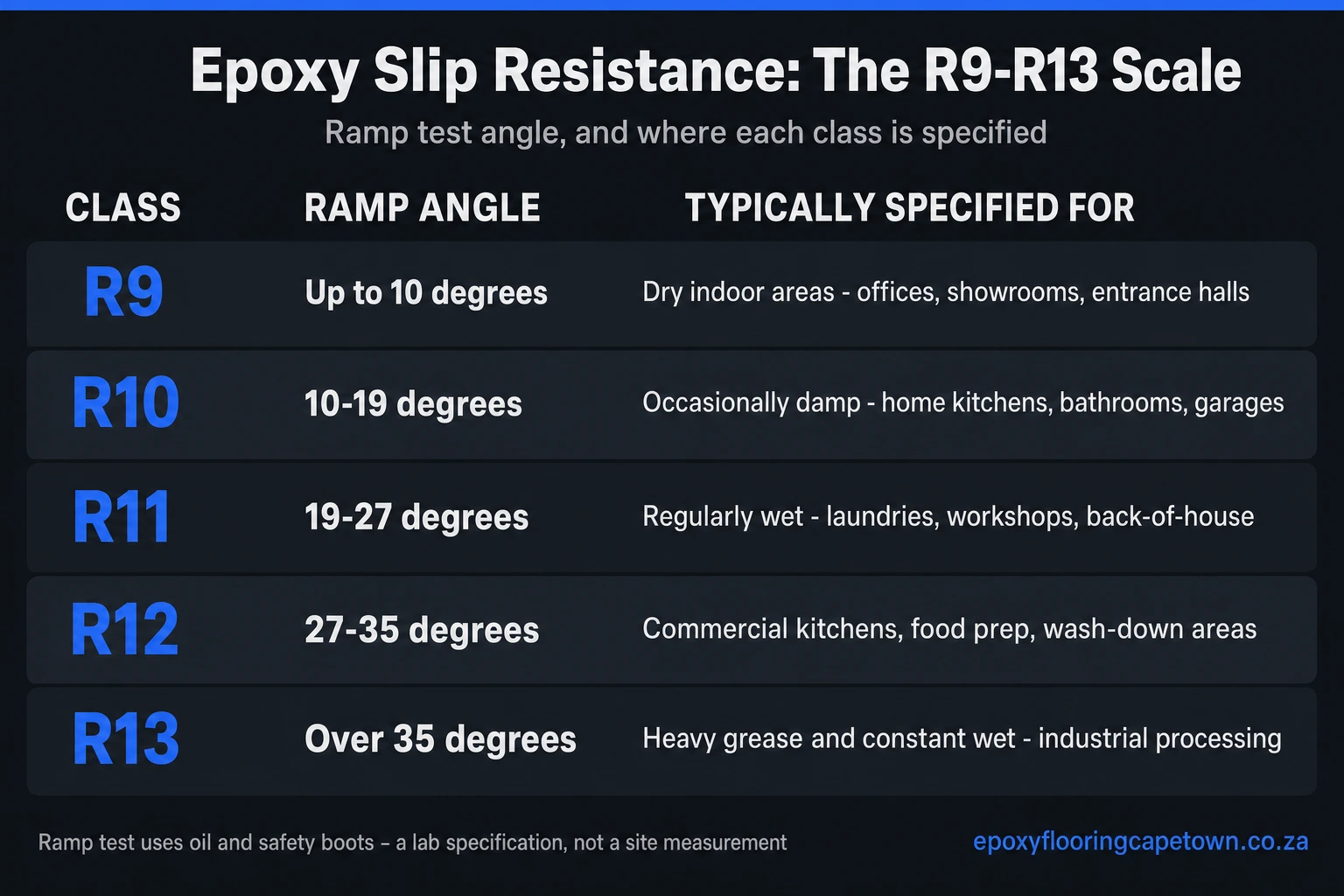
| Class | Ramp angle (oil, safety boots) | Typically specified for |
|---|---|---|
| R9 | Up to 10° | Dry indoor areas — offices, showrooms, entrance halls |
| R10 | 10–19° | Occasionally damp — home kitchens, bathrooms, garages |
| R11 | 19–27° | Regularly wet — laundries, workshops, back-of-house |
| R12 | 27–35° | Commercial kitchens, food prep, wash-down areas |
| R13 | Over 35° | Heavy grease and constant wet — industrial processing |
A separate barefoot classification exists for pools, showers and change rooms, tested with soapy water instead of oil: class A covers roughly 12–18°, class B 18–24°, and class C above 24°. If the floor you are planning will be walked on barefoot, that is the scale that matters, not the R scale.
The pendulum test: PTV
The pendulum test swings a weighted, rubber-shod arm across the floor and measures how much the surface slows it down, producing a Pendulum Test Value. The UK's Health and Safety Executive groups the results into three bands: 0–24 is high slip potential, 25–35 is moderate, and 36 or above is low slip potential. That 36 threshold is the widely used benchmark. At or above it, the risk of slipping drops to roughly one in a million footfalls.
Here is the part that trips people up, and it is worth knowing before you compare quotes: you cannot convert an R rating into a PTV. The two tests use different contaminants, different contact materials and different mechanics. R ratings are also produced in a laboratory on a factory sample, which means they describe the product as manufactured rather than your floor as installed and worn in. The pendulum, by contrast, can be run on site on the actual floor. That is why the HSE and the UK Slip Resistance Group treat it as the reference method for assessing a real installation. Both were folded into a single European standard in 2021.
The practical takeaway: an installer quoting "R11" is telling you something useful about the system they intend to lay, but it is a specification, not a measurement of your finished floor. Ask what aggregate they are using and where, not just for a letter and a number.
How installers make an epoxy floor non-slip
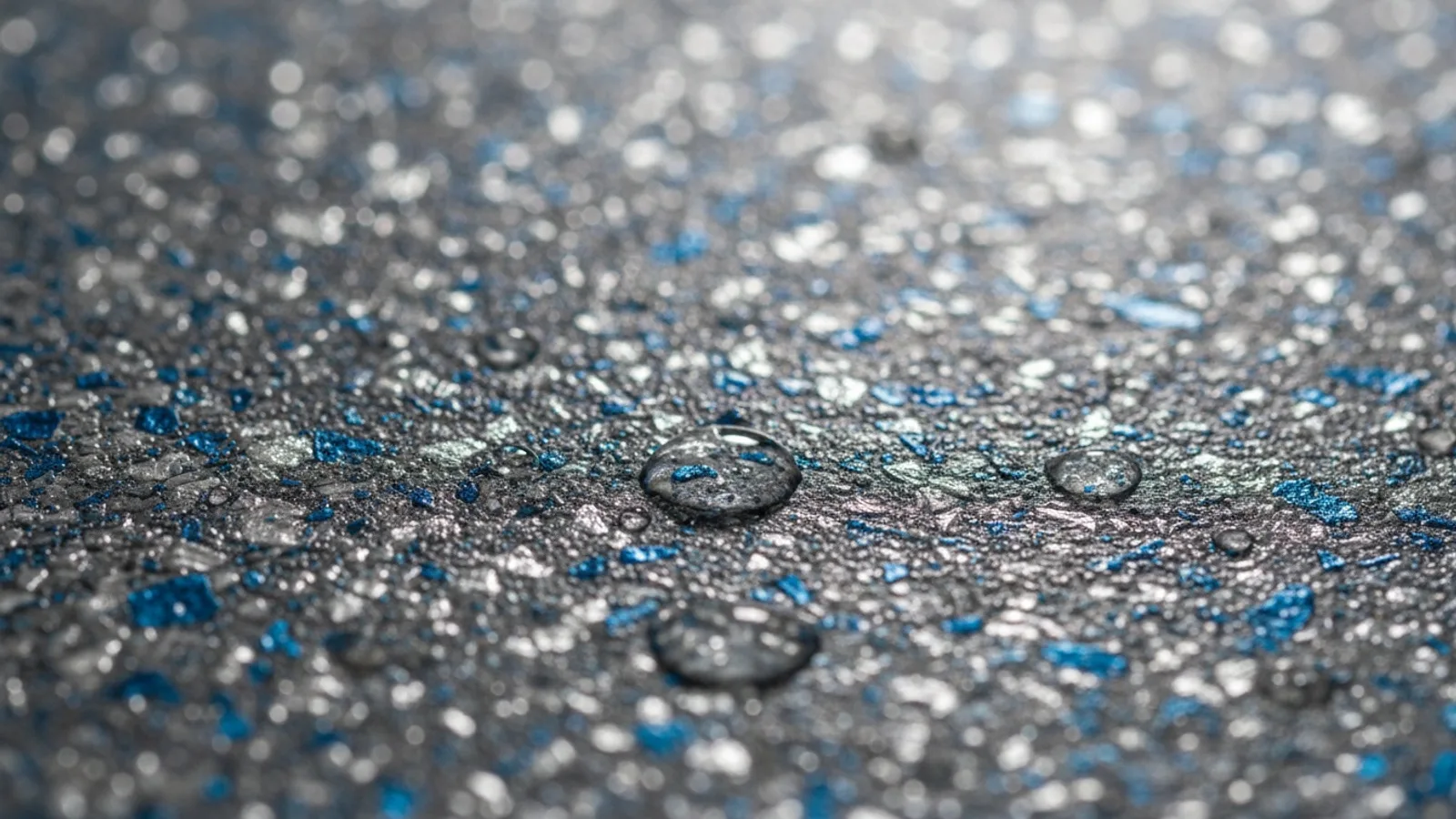
Making epoxy grip is not complicated. It comes down to putting texture into the final coat so there are thousands of tiny high points standing proud of the resin, breaking up any liquid film and giving your shoe something to bite on. The aggregate is either blended into the topcoat before rolling, or broadcast onto the wet coat and then sealed in. The second method is used for heavier grit, which is too dense to stay suspended in the mix.
The four options you are likely to be offered:
- Aluminium oxide. The toughest and most aggressive of the group, and the longest-lasting. Standard for industrial floors, loading bays, ramps and workshops — several commercial anti-slip epoxies come with the grit already blended into the curing agent. Hard on bare skin, so it is not the choice for a bathroom or a pool surround.
- Silica sand or quartz. The cost-effective workhorse. Broadcast into the coating it gives a fine, sandpaper-like profile with plenty of grip. It is the usual answer for garages, patios and utility areas where you want real traction without industrial coarseness.
- Polymer or plastic bead. Rounded rather than sharp, so it grips without feeling abrasive. It is comfortable underfoot in bare feet and much easier to mop clean, since there are no sharp edges holding onto dirt. The sensible pick for bathrooms, poolside areas and residential wet rooms.
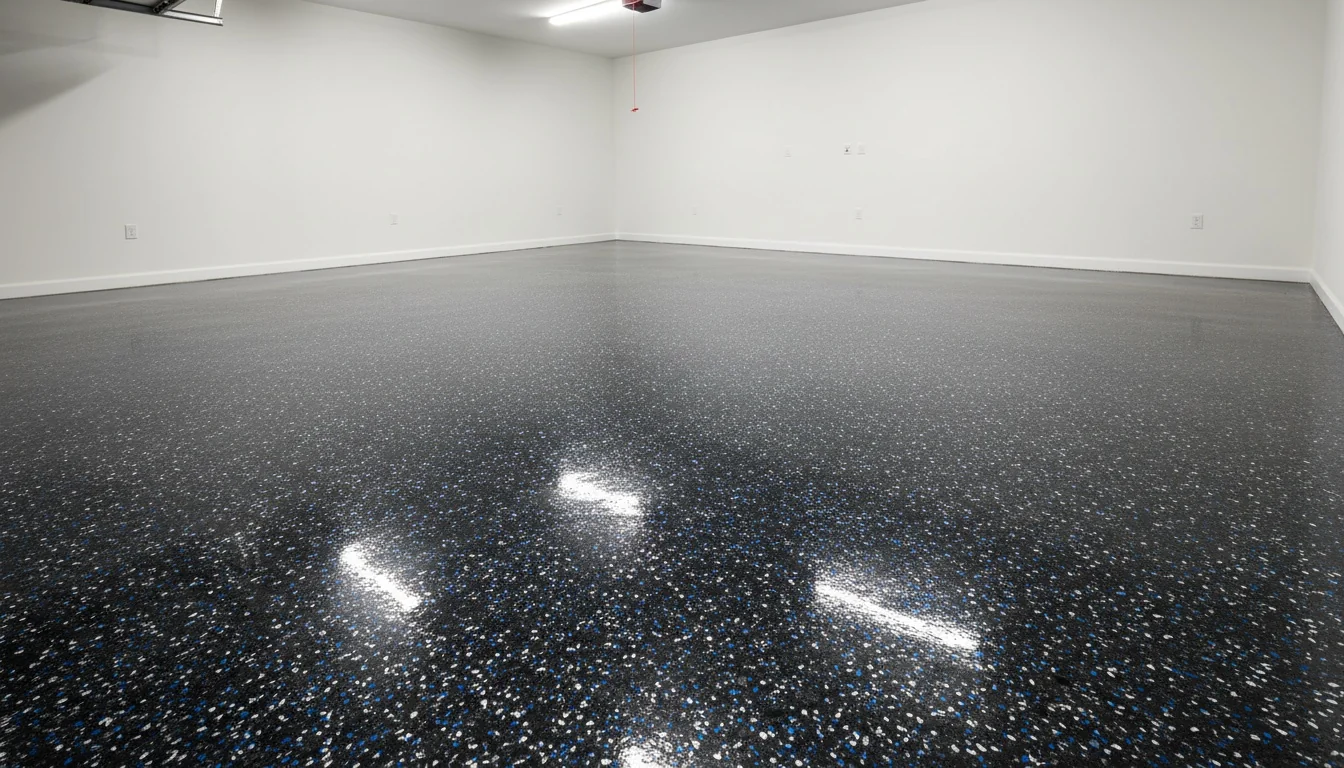
- Flake and quartz broadcast systems. These carry their own built-in texture: the chip profile itself creates a lightly undulating surface that is noticeably less slippery than a flat gloss coat, before any additional aggregate is considered. That is one reason flake systems are so popular in garages.
Every one of these involves a genuine trade-off, and anyone who tells you otherwise is selling. The coarser and grippier the texture, the harder the floor is to mop and the less pleasant it is on bare feet. A heavily textured surface will also trap dirt in a way a gloss floor never does. That trade-off is a recurring theme in the pros and cons of epoxy generally: almost every downside has a fix, and the fix usually costs you something elsewhere.
Matching the finish to the room
The real skill is not choosing the grippiest possible option. It is matching the level of grip to how the room is actually used. Over-specify and you end up with a floor that is a chore to clean and unpleasant to stand on. Under-specify and you have created a hazard.
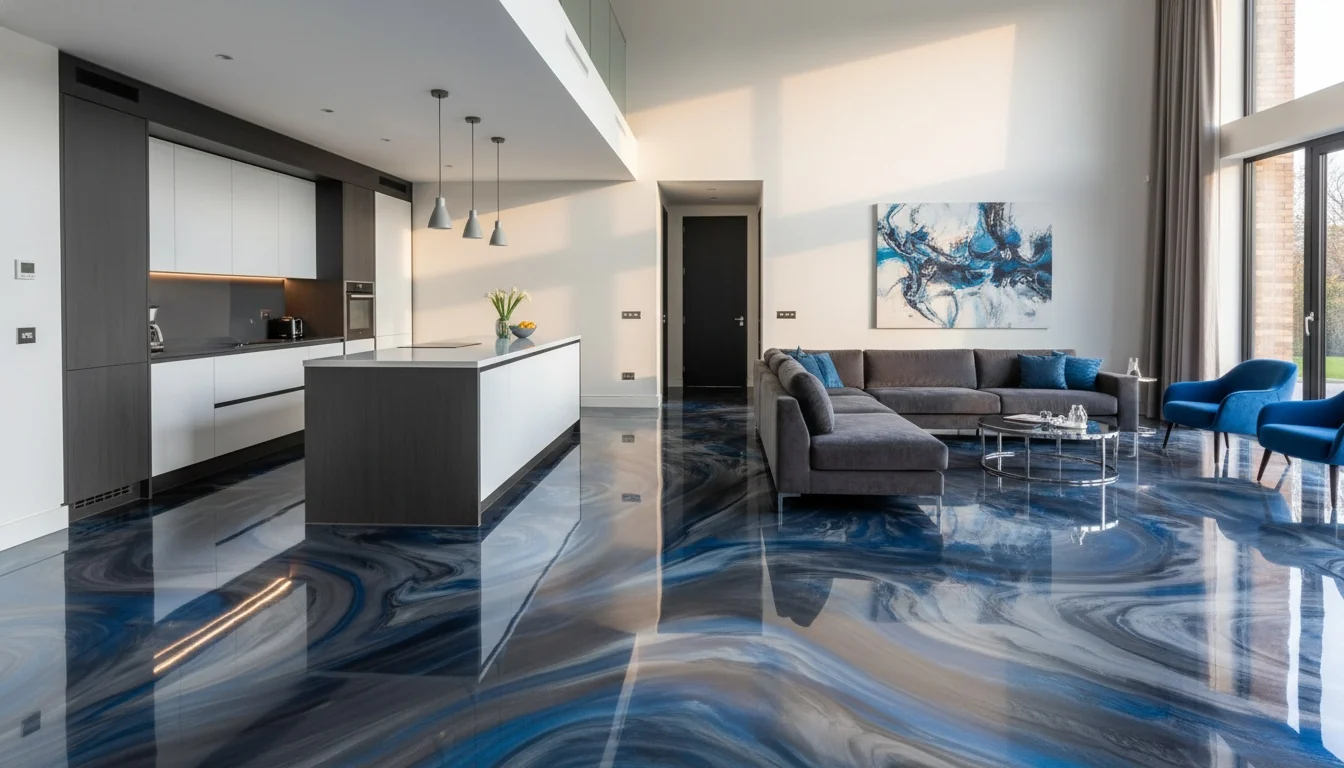
In a home, the split is usually straightforward. Living areas, showrooms and dry interiors are fine with a smooth finish, because they simply do not get wet. Kitchens, bathrooms, laundries and the strip of garage floor just inside the door are where texture earns its keep — those are the places where water arrives regularly and unannounced.
For businesses the stakes are higher, because a slip on your floor is your liability. Commercial kitchens, food-processing areas, wash bays, cold rooms and anywhere with a wash-down regime need a properly specified anti-slip system from day one, not a gloss floor with a retrofit later. This is standard territory for commercial epoxy flooring, where the slip class is written into the spec alongside chemical resistance and film thickness.
One more consideration: texture affects how a floor wears, not just how it grips. An aggregate layer takes the abrasion that would otherwise dull the resin, but it also gives dirt somewhere to sit, so cleaning routines matter more. It is worth reading up on the durability of epoxy alongside the slip question, since the two decisions interact. Both are ultimately decided by the quality of the preparation underneath.
Waterproof is not the same as non-slip
This confusion comes up constantly, so it is worth separating clearly. A correctly installed epoxy floor is seamless and non-porous, so liquid cannot soak through into the concrete underneath. That is genuinely useful. It is why epoxy suits kitchens, bathrooms and wash-down areas, and why it is so easy to clean.
But that same non-porous quality is exactly what leaves water sitting on the surface. Being waterproof does nothing whatsoever for grip; if anything it guarantees the film that causes the problem. Water resistance and slip resistance are two separate requirements, and a floor can have one without the other. When you brief your installer, specify both.
What the South African rules actually say
It surprises most people that there is no number to comply with. South Africa's National Building Regulations, through SANS 10400, require that floors in laundries, kitchens, shower-rooms, bathrooms and toilets are water-resistant. But they do not set a minimum slip-resistance class for those floors the way the R and PTV scales do. Employers also carry a general duty under occupational health and safety law to keep workplace floors safe, which in practice means a reasonable, defensible specification rather than a specific figure.
What that means for you is simple: nobody is going to catch an under-specified floor on your behalf. If the room gets wet and the quote does not say what anti-slip aggregate is going into the topcoat, ask — before you sign, not after the first slip.
The bottom line
Is epoxy flooring slippery? Only if it is specified to be. Dry, clean epoxy grips fine; it is a liquid or dust film on a smooth gloss surface that creates the risk, and that risk is designed out with the right aggregate in the topcoat. The questions worth asking are what the room is really used for, how often it gets wet, whether anyone will be barefoot on it, and what texture the installer proposes to deliver for those conditions.
That is a conversation best had on site, with someone looking at the actual room, the actual drainage and the actual traffic. An experienced Cape Town installer will walk the space, ask how it gets cleaned, and recommend a system and slip class to match, then put it in writing with a firm price. If you are weighing up a wet area and want that spelt out properly, book your free quote and get the slip specification on paper from the start.